Software, IT, OT & cybersecurity
The new generation of industrial VPN routers takes IIoT cybersecurity to the next level

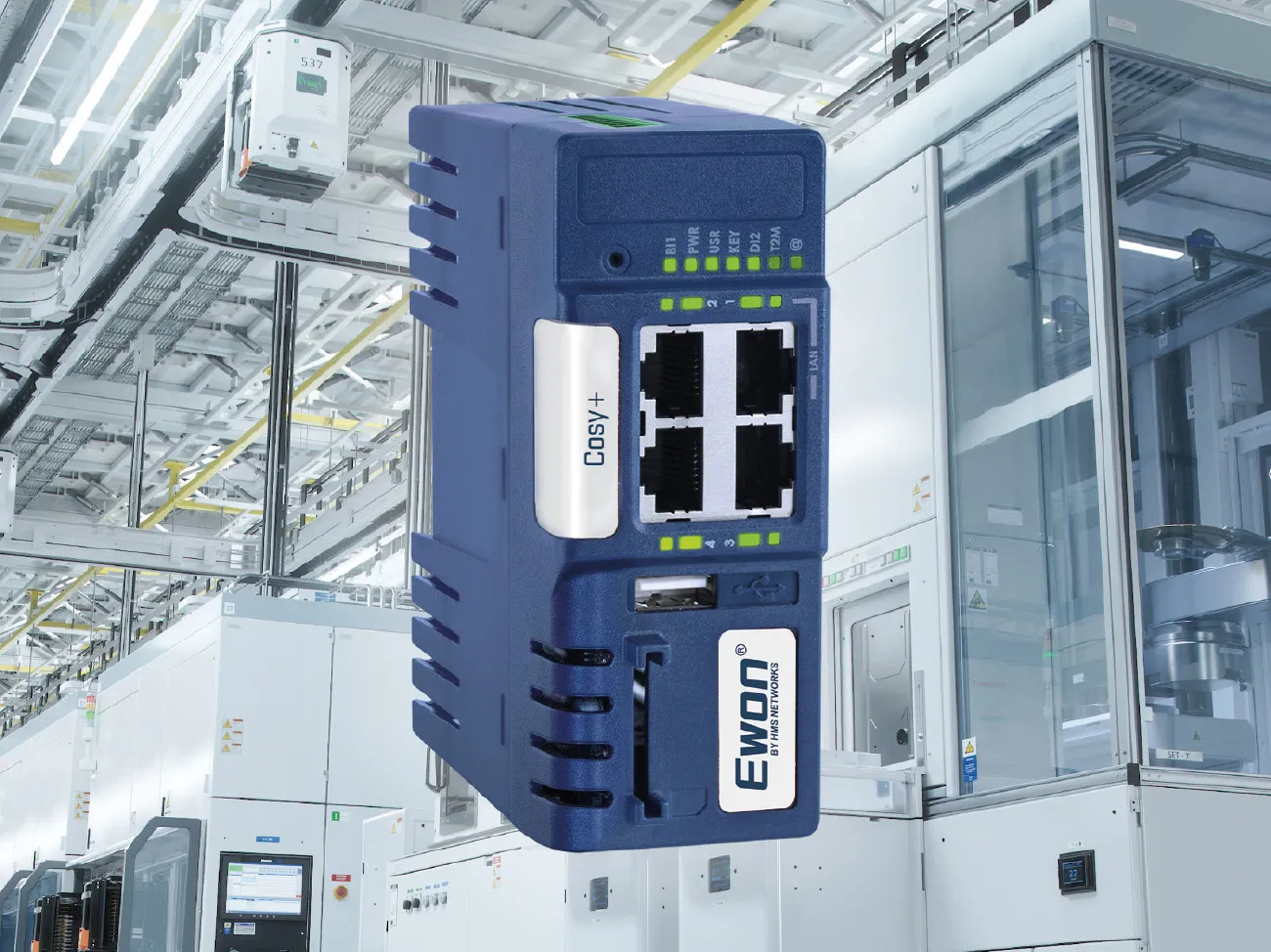
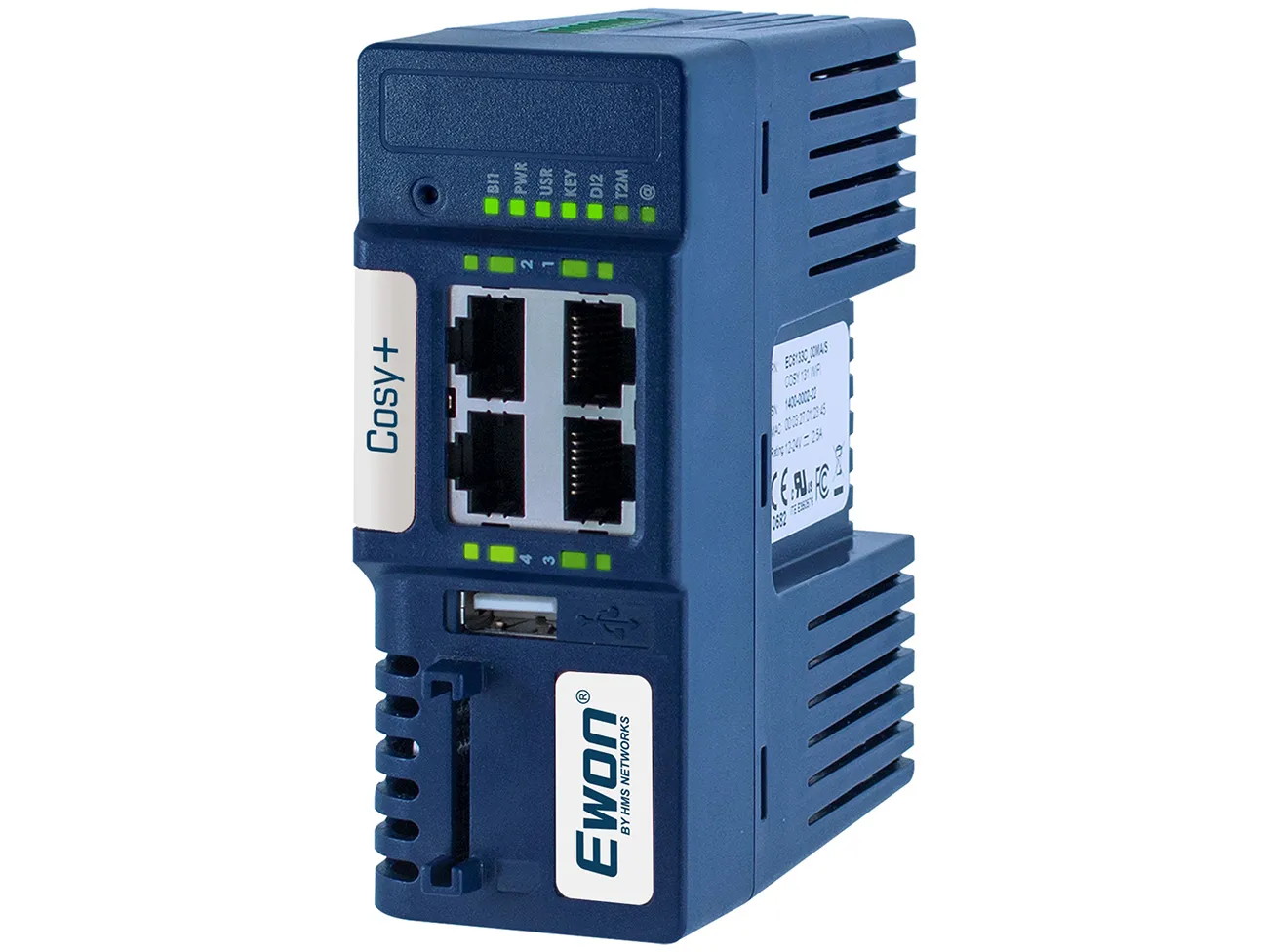
Cybersecurity must be taken seriously. A study by Palo Alto Networks shows that no less than 98% of IIoT traffic is unencrypted and that nearly 60% of devices are vulnerable to cyberattacks. With the Ewon Cosy+ from HMS Networks, Bintz Technics is offering a new generation of industrial VPN routers that takes IIoT cybersecurity to the next level. State-of-the-art hardware security enables users to commission and programme industrial equipment remotely and securely, and even troubleshoot problems. This considerably reduces the risk of cyberattacks.
Connected devices are now an integral part of our society. Consider the number of computers and IoT devices, such as smartphones, smartwatches, cameras, speakers and home automation systems, that we use today, and compare it with the number we used three years ago, for example. The difference is immediately apparent. This also means that the importance of security has increased significantly.
“While traditional IT has reached a certain level of maturity, the rapid growth of IoT seems to be driving an increase in cases where protection is poorly deployed. On IoT devices, security must start as soon as they are switched on,” says Redouan Azghay, sales engineer at Bintz Technics. “Running reliable and authentic code starts with secure booting of the device. The ‘Secure Boot’ function ensures that only software validated by the manufacturer can run. Without this process, custom operating systems or manipulated software could be loaded, for example, if someone wanted to interfere with the different boot stages. HMS Networks’ new Ewon Cosy+ industrial VPN router provides a fully secure boot sequence, running only programme code approved by Ewon. The authentication chain consists of public and private keys combined with a digital signature. The bootloader is loaded only when these elements match. If this verification chain is interrupted for any reason, the device will not start.”
The first choice for twenty years
HMS Network is a market leader in the provision of industrial information and communication technology (Industrial ICT) solutions. It develops products under the Ewon® name, the first choice for industrial remote access solutions for twenty years. More than 400 000 devices worldwide are connected via the Talk2M cloud platform, making Ewon the clear number one in industrial remote access connectivity. Bintz Technics is responsible for distributing the products in Belgium and Luxembourg.
“With the Ewon Cosy+, the successor to the highly successful Ewon Cosy 131, HMS Networks has introduced a new generation of industrial VPN routers that takes IIoT cybersecurity to the next level. Alongside its performance and ease of use, this new development stands out in particular for its state-of-the-art hardware protection. The router was designed in accordance with ISO 27001 guidelines. Through its collaboration with cybersecurity specialists Nviso, Ewon can offer a solution tested against the most stringent IIoT security standards,” explains Redouan Azghay.
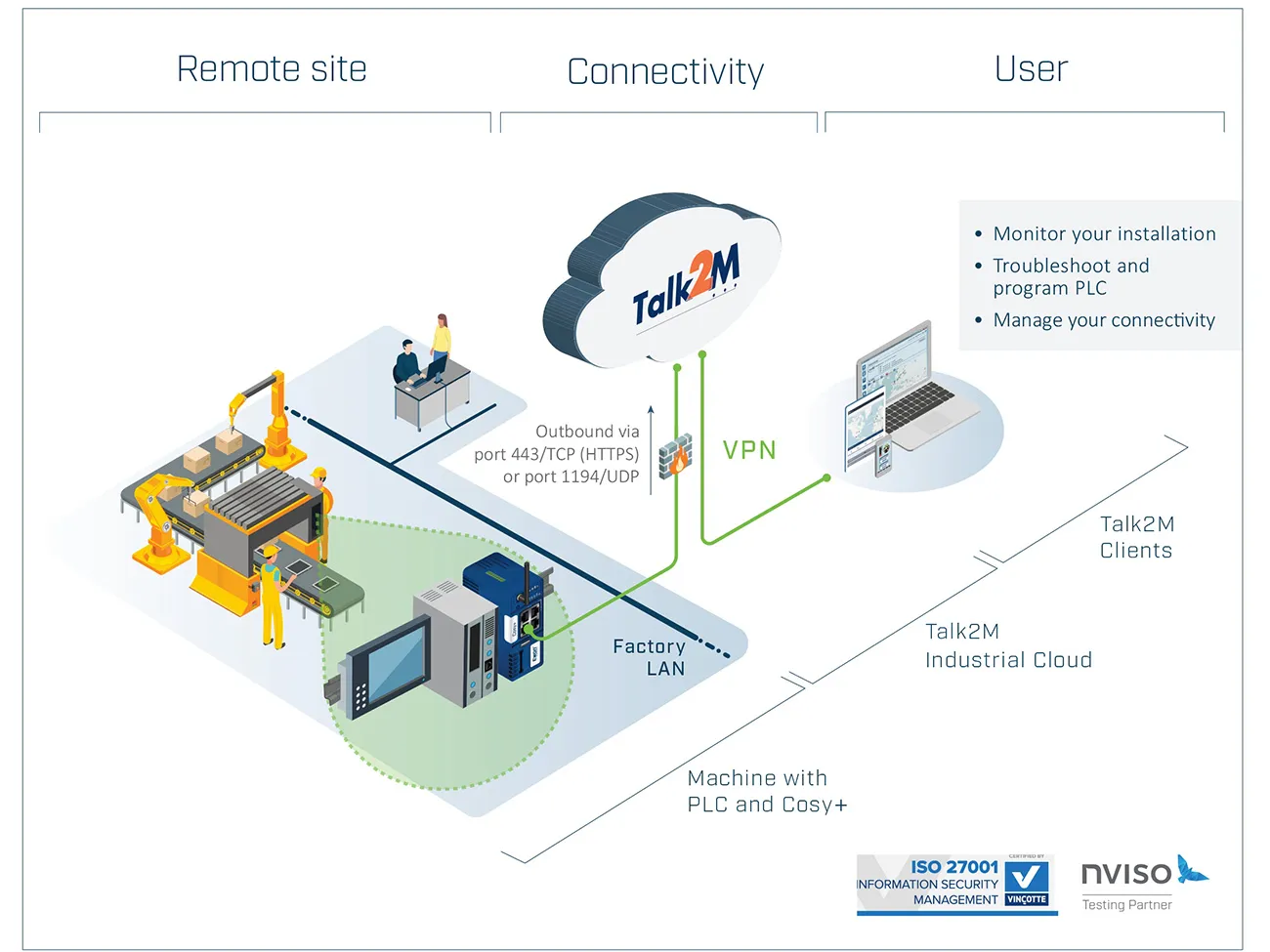
“The combination of the Talk2M industrial cloud platform with the Cosy+ and its integrated hardware security enables users to commission and programme industrial installations remotely and securely, and even carry out fault diagnostics. This reduces machine downtime. It also saves time and money, as technicians do not have to make unnecessary site visits to carry out work. Technician productivity is therefore significantly improved.”
Product security is a major concern for Ewon specialists. That is why a ‘Secure Element’ has been integrated into this new Cosy+, adding an extra layer of hardware security. The ‘Hardware Root of Trust’ is a fundamental component of the device’s secure boot cycle. This gives the installation a high level of protection against cyberattacks.
‘Secrets’ and ‘vaults’
Ewon’s measures are another reminder of how important cybersecurity is to our industry and society as a whole. Cyberattacks can bring businesses and other institutions to a complete standstill for days or even weeks, and cost them substantial sums. That is why this report also looks at advanced cybersecurity concepts: ‘secrets’, ‘vaults’ and ‘key ceremonies’.
In hardware security, the bar for confidentiality, authenticity and integrity is raised even further through the use of keys in ‘Hardware Root of Trust’, ‘Secure Boot’ and ‘Code Signing’ mechanisms. However, this creates three challenges: the secure creation of ‘secrets’; their storage, access and secure use; and the secure provisioning of devices. If ‘secrets’ are disclosed, the whole solution is compromised.
“First, the keys required for the device to operate must be created during the development phase. The choice of key type used in the process depends on the desired cryptographic properties of the key and its size. The creation of so-called ‘secrets’, which include ‘keys’, cannot be carried out by a human being for security reasons. ‘Secrets’ are created in a central location and stored in an electronic ‘vault’,” explains Azghay. “Since the ‘vault’ and the ‘secrets’ it contains are so sensitive, we must ensure that its configuration and access cannot be altered. We must also ensure that the ‘secrets’ are produced in accordance with the chosen specifications. In addition, it is crucial that these ‘secrets’ are never visible to the outside world before they enter the vault. The ‘key ceremony’ ensures this.”
‘Key ceremony’
The ‘key ceremony’ is the process that ensures all procedures for generating and preserving cryptographic elements remain secret. Only a select group of participants, known as ‘master keys’, can open the ‘vault’ and modify its contents. A minimum number of ‘master keys’ is always required to carry out these operations. No individual participant can make changes alone.
The ‘key ceremony’ process always follows a predefined scenario, and all sub-processes are documented. The ‘secrets’ are kept in the ‘vault’ and are known to no one, not even the ‘master keys’. The slightest inconsistency during this ‘key ceremony’ calls the confidentiality and integrity of the ‘secrets’ into question, invalidating the entire process and requiring it to be restarted from the beginning.
“Access to the ‘secrets’ is strictly controlled by the ‘vault’. Only identified processes and applications can request tokens, passwords, certificates and encryption keys. Every firmware update released for the Ewon Cosy+ is subject to this security mechanism before it is published and installed. It is vital that all firmware updates for the Cosy+ are first signed at Ewon before being published, and verified by the device before installation. The signature uses a private key, which is generally one of the ‘secrets’ in the ‘vault’ and is known to no one, but can be accessed to perform this action. The device itself has the public key to confirm the signature,” says the Bintz Technics sales engineer.
“The ‘secrets’ generated during the development phase must be implemented in the devices during production without breaking the ‘chain of trust’. This task is generally entrusted to specialised partners, who pre-provision the ‘secrets’ in secure locations within the device. Once again, a ‘key ceremony’ ensures that the ‘secrets’ are transferred from one secure ‘vault’ to another without being visible, even for an instant.”
Question about this story? Ask your question
Companies in this story

Keep following this
Get an email when a new story is published. No account needed.
- ThemeProtecting connected industrial systems
- SubjectSoftware, IT, OT & cybersecurity
- CompanyBintz Technics