Sovereignty is not relinquished, it is built, contract by contract

There is something deeply paradoxical about the way Europe talks about technological sovereignty today. We have turned it into a rallying cry, almost a slogan, wheeled out at every summit and in every roadmap. But on the ground, the reality is quite different. According to the European Commission, more than 50% of the technologies used in Europe’s critical infrastructure come from outside the continent. When it comes to AI, the United States and China together account for nearly 80% of global investment. These figures point to a tangible dependency: a continent that consumes more technology than it produces and relies on others for functions that have become essential.
“Buying European” is too often confused with “being sovereign”. They are not the same thing. But the reverse is also true: sovereignty does not mean autarky. No manufacturer, in Europe or elsewhere, produces every component it incorporates into its products. A sensor can quite reasonably come from a foreign supplier. The difference lies in what is done with it: in the design, the algorithms, the electronics and mechanics developed in-house, the assembly carried out on our own soil, and the integration of all these elements into a coherent system. This is precisely what sets an assembler apart from a genuine manufacturer. This expertise is built up over time by investing in engineering services, engineers trained here and algorithms developed in-house. It means accepting a simple truth: you cannot become sovereign by outsourcing your intellectual capabilities to others.
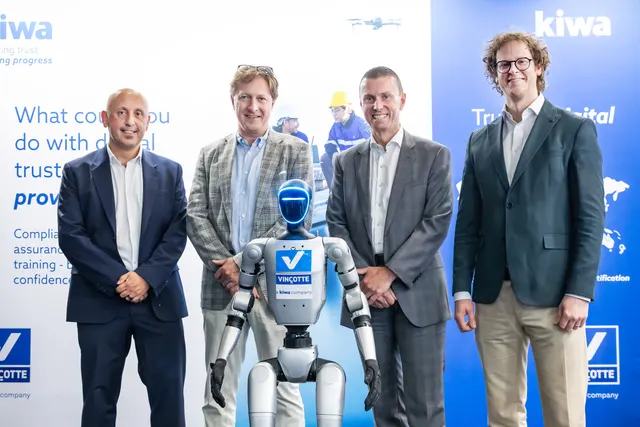
Technological sovereignty is first and foremost an industrial issue. Drawing up regulations, taxonomies or investment plans is not enough: businesses need to step up on the ground. At Running Brains Robotics, we adopted this approach more than eighteen years ago. Our autonomous security robots are designed, developed and manufactured in France, in Mérignac, by our own teams. This is not a marketing claim: it is essential if critical infrastructure operators are to retain genuine control over what they deploy on their sites. We are not alone in this. A new generation of European players is emerging in robotics, applied AI, sensors and industrial platforms.
What is most lacking today is not innovation. It is demand. European buyers, both public and private, still too often favour solutions from elsewhere, out of habit, for convenience or because they seem less risky in the short term. Price is also often cited as an argument. This is largely a misconception: for comparable functionality, price differences are often far smaller than people think, and narrow considerably when assessed in terms of total cost, including integration, maintenance, support and supplier dependency. Technological sovereignty calls for a consistent approach to procurement: where quality is comparable, prioritise solutions developed on the continent and sometimes be prepared to support a European manufacturer before it has reached the scale of its American or Chinese competitors.
Technological sovereignty is about a choice for society: a Europe that does not simply consume technology, but produces it itself; an industry that does not surrender its most strategic expertise; and security in the broadest sense of the word, covering sites, data and highly skilled jobs, built on foundations that we control ourselves. This choice is not made in grand speeches. It is made in tender processes, R&D budgets and investment decisions. Contract by contract. Ultimately, it depends on our collective ability to trust our own engineers, our own entrepreneurs and our own manufacturers.
Question about this story? Ask your question
Keep following this
Get an email when a new story is published. No account needed.
- ThemeProtecting connected industrial systems
- SubjectRobotics