Sorting, transport, storage and picking: drives to speed up intralogistics
Texte & photos Faulhaber Group
In every industrial sector, transport structures suited to intralogistics are a prerequisite for withstanding competitive pressure over the long term. A growing share of the tasks involved in storing items in warehouses, and in picking and preparing them for dispatch, is being taken over by automatic storage and retrieval machines, driverless transport systems and intelligent logistics robots. Speeding up these processes calls for flexible systems that can operate reliably 24 hours a day. Such logistics solutions are often fitted with powerful micromotors.
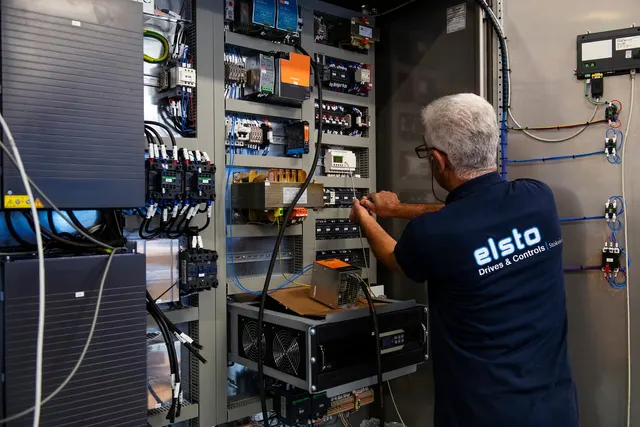
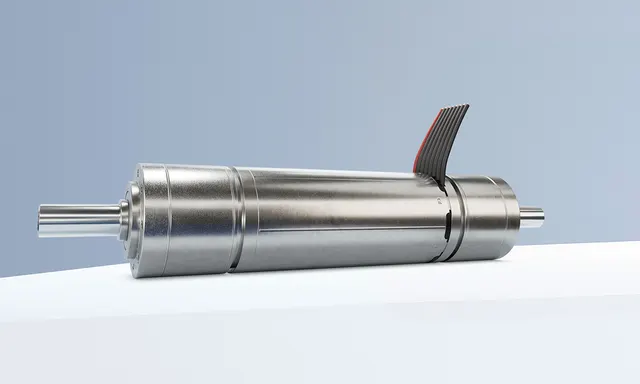
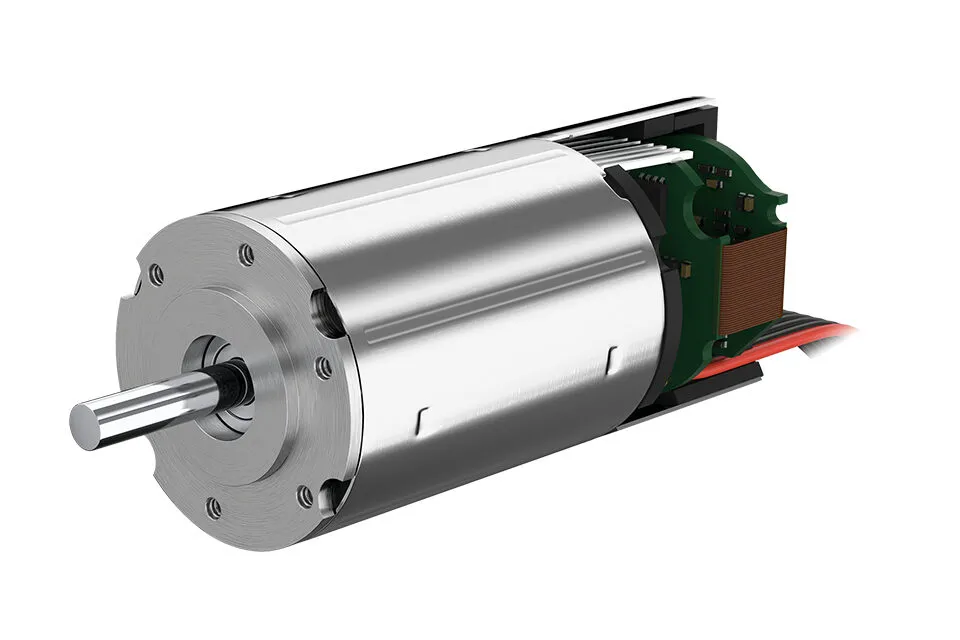
Modern intralogistics places high demands on drives: they often have to deliver considerable forces in extremely confined spaces, run reliably in continuous or stop-and-go operation and, in many cases, perform highly precise positioning tasks. Speed also plays an important role since, in large warehouses, thousands of orders have to be processed every day. FAULHABER drive systems have repeatedly proven their performance in this field, for sorting and transport as well as for storage and picking (image 1). Thanks to their modular design, the motors can be combined with a wide range of high-resolution encoders for precise positioning tasks and with high-performance gearheads for applications requiring high torque. Compact motion controllers can also be integrated into the drives or installed externally.
Power and fine handling
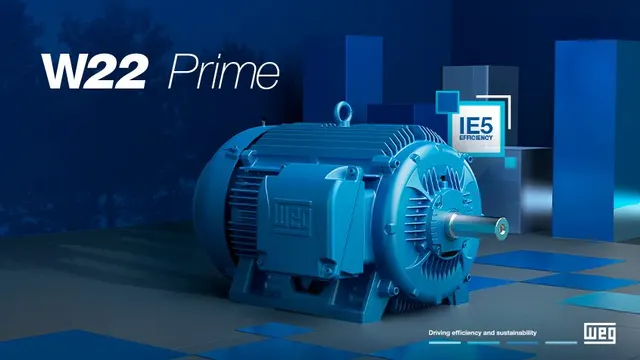
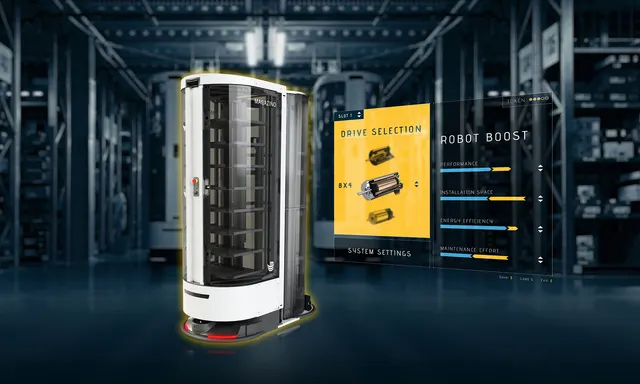
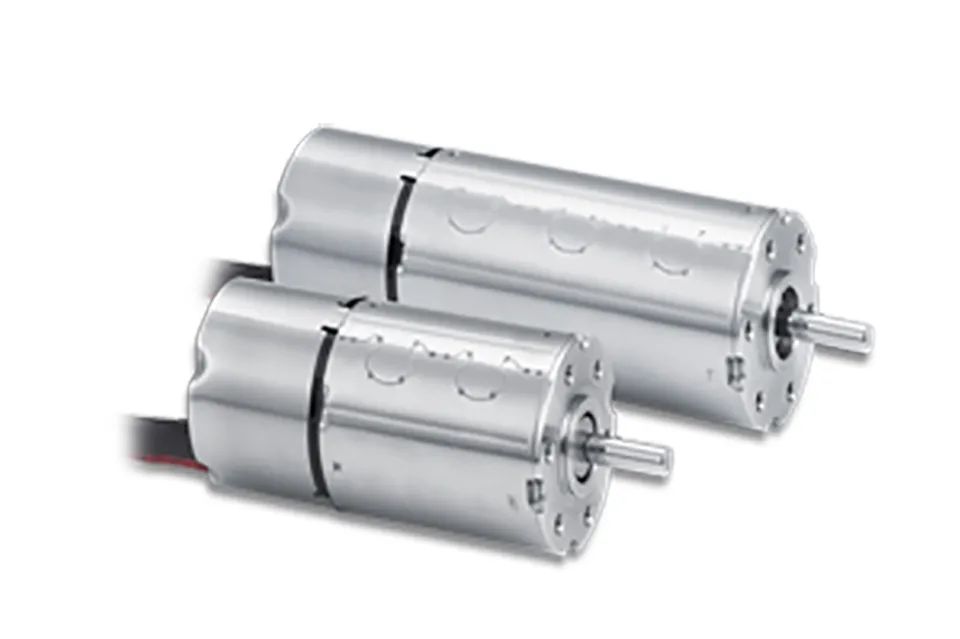
Autonomous mobile robots are a key element of the "intralogistics 4.0" concept (image 2). They are used for storage as well as for picking and preparing shipments. They optimise the flow of materials, relieve operators and can even replace forklift trucks and pallet trucks. Autonomous order-picking robots, capable of grasping individual items with great precision, are one example. A typical order-picking robot consists of a lifting column and a gripper. Its drive unit can, for example, be fitted with BX4 series brushless DC servomotors with integrated motion controller and planetary gearhead. Used in the gripper, this combination ensures precise positioning during storage and picking, even in continuous operation and with constantly varying loads. In this configuration, the complete drive unit weighs only around 300 grams. A counterweight is therefore not required, even when the gripper arm is fully extended. With a diameter of just 32 mm and a length of 85.4 mm, the brushless DC servomotors are also very compact. This makes it possible to design a very flat gripper capable of picking up parcels stored just above floor level. Costly storage space can therefore be used to the full. Thanks to the brushless commutation system, the motors offer a long service life and high reliability. They deliver high torque and, thanks to their balanced rotor, run very quietly. If necessary, torque is limited by the integrated current control, which also reliably protects the drive against overload.
Compact drives for fast start/stop operation
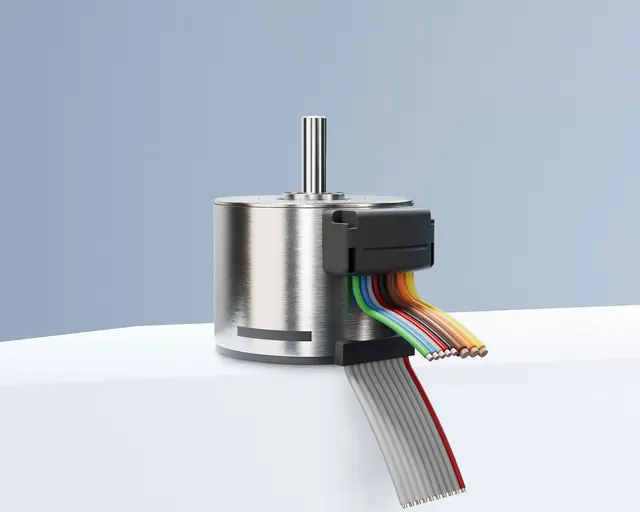
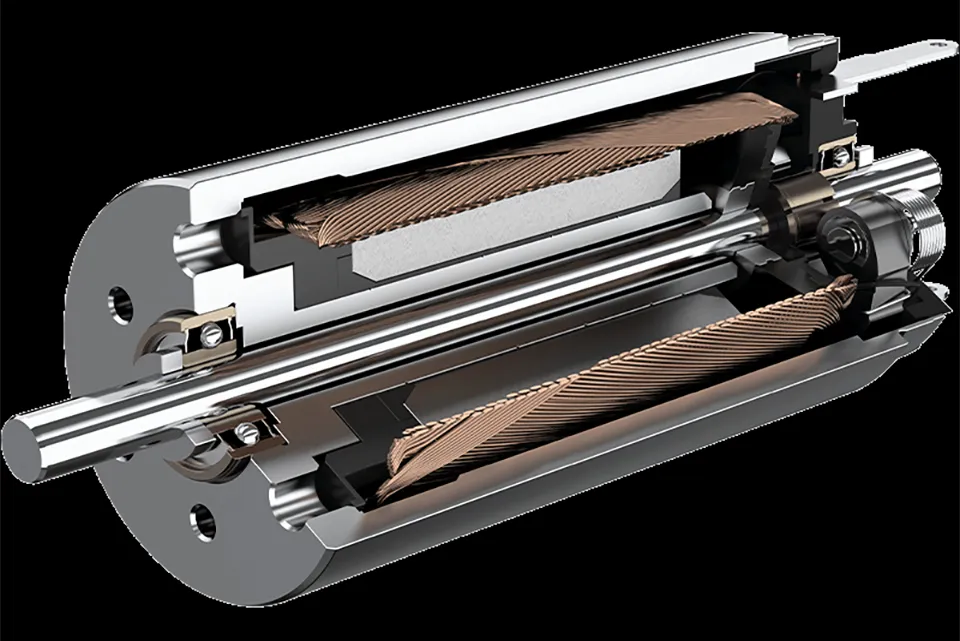
Combined with suitable gearheads, CXR series graphite-commutated DC micromotors have also proven their worth in handling tasks. Their commutation system is very robust and particularly well suited to dynamic applications requiring high performance with fast start/stop operation. These characteristics are often required in handling systems, but also for automatic sorting, notably at the diverters that change the route of goods along the conveyor tracks (image 3). Thanks to their linear characteristic, DC motors are easy to control. Combined with high-resolution encoders, they are ideally suited to precise positioning tasks. The high-quality neodymium magnets and FAULHABER's proven winding ensure high power density in a compact design. They can be installed almost directly in the handling elements and, despite their small size, can lift considerable loads.
Flexibility throughout production
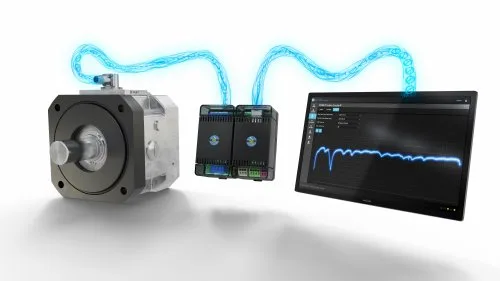
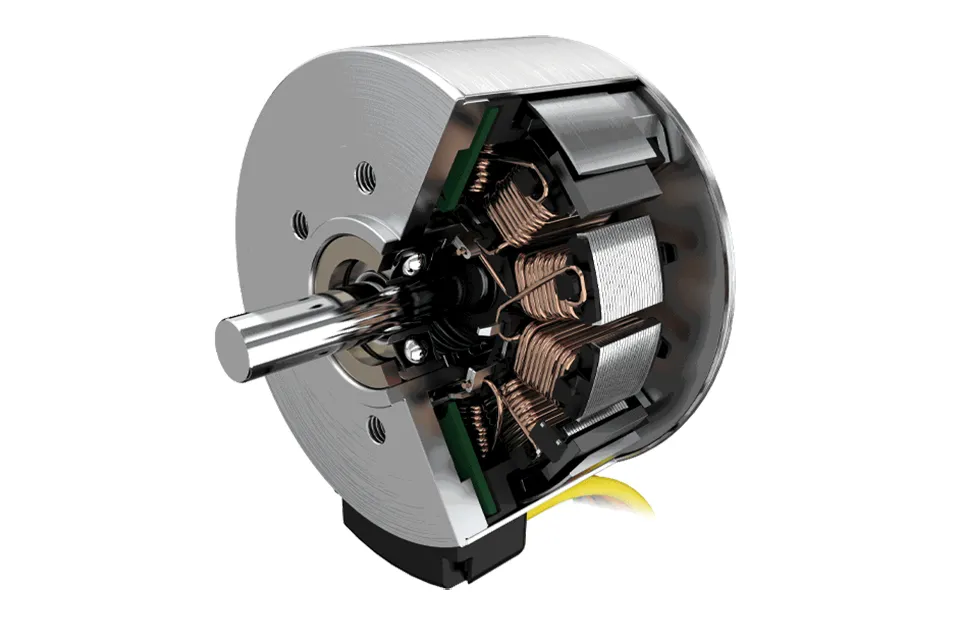
Automated guided vehicles (AGVs) are a prime solution for ensuring flexible transport within production processes (image 4). In internal material transport systems, the main demands placed on drives are reliability, speed, flexibility and, quite often, a small footprint. Power consumption also plays an important role, since the vehicles' range depends directly on their battery. The BP4 series brushless DC servomotors, for example, are suitable for driving the wheels, as the motor force can be transmitted to them via planetary gearheads and drive belts. The motor offers high efficiency: its innovative winding technology allows a high copper content, while the high symmetry of the winding reduces losses to a minimum. For accurate position detection, IE3-1024 series encoders are mounted directly on the servomotors. Available in different resolutions, these magnetic incremental encoders have an index output for referencing one revolution of the drive shaft, as well as a standardised electronic encoder interface. The resolution, direction of rotation, width and position of the index can be flexibly adapted to the application. A motion controller handles the control of the servomotors. Such drive systems are also used on mobile robotic platforms that move fully autonomously through industrial premises, without a pre-installed guidance system. Their high power density (image 5) is a major advantage, particularly in wheel modules.
Plenty of power in a very confined space
The BXT series flat, high-torque motors are particularly well suited to integration into wheel drives where the space available in the axial direction is limited. Thanks to an innovative winding technology and an optimised design, these motors are only 14, 16 and 21 mm long, while delivering torques of up to 134 mNm, for diameters of 22, 32 and 42 mm respectively. For precise speed control and applications demanding high positioning accuracy, magnetic encoders or speed controllers of matching diameter are now fully integrated into the housed motor versions, which lengthens the drive by only 6.2 mm. Speed control is provided by the digital Hall sensors integrated into the motors. A wide speed range, from 200 to 10,000 min⁻¹, is thus available. This compact drive combination is ideal for applications where space is limited and simplifies installation and commissioning. The corresponding GPT series metal planetary gearheads are likewise characterised by a short design, high torque and a wide choice of finely graduated reduction ratios. For more information, visit: https://www.faulhaber.com
Question about this story? Ask your question
Keep following this
Get an email when a new story is published. No account needed.
- ThemeHigh-performance drives and precise motion
- SubjectMotion & drives