Software, IT, OT & cybersecurity
Automation and artificial intelligence: SMEs must not miss the boat
Texte Johan Debaere | Photos igus
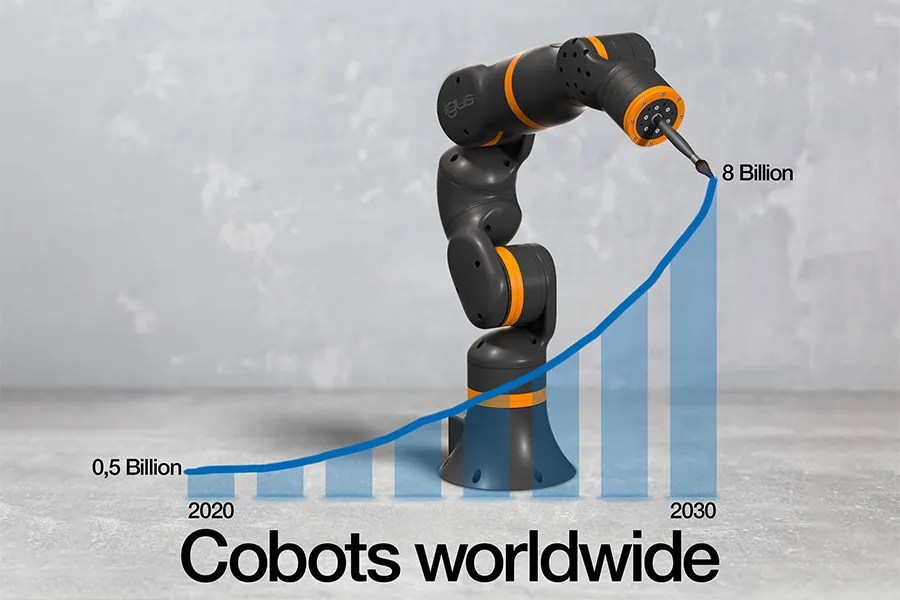
Accountants, journalists and IT specialists are surprised by how quickly automation and artificial intelligence are advancing. For industry, and especially large companies, they open up new prospects leading to smart factories. Small and medium-sized enterprises (SMEs), meanwhile, risk being left behind because they are often not ready to take the plunge. However, low-cost solutions enable them to invest in automation and robotics, and avoid missing the boat. German company igus is responding to demand by developing and manufacturing robots at competitive prices.
According to the International Federation of Robotics (IFR), robots are being deployed in an increasing variety of applications in industrial environments. In 2022, a record 3.5 million robots, worth a total of 15.7 billion euros, were recorded worldwide. However, rapid growth is still a long way off. This is one of the findings of a study by management consultancy McKinsey, carried out for the latest edition of automatica. The study’s authors see a small number of factories setting the standards for automation in today’s manufacturing landscape, from artificial intelligence and digital twins to self-learning robots. Artificial intelligence (AI), in particular, was one of the major themes at the show. Rapid developments in this field herald a new era of automation. However, the study indicates that most factories are still far from achieving the levels of digitalisation and automation possible today. They risk falling behind in an industrial environment characterised by rapid change and development.
Significant growth potential for low-cost automation
It is not only large companies with substantial budgets that can take part in the future of AI automation. Small and medium-sized enterprises that have so far been unable to invest in such solutions now have an opportunity. Low-cost automation, meaning cheaper and less demanding automation products, offers a solution in a market segment with significant growth potential. The number of manufacturers and distributors of such products has continued to rise in recent years. They offer robots at prices significantly lower than those of conventional industrial robots. They use webshops where companies can configure their robot in just a few clicks, without having to rely on costly integrators.
Thanks to so-called no-code technology, these robots are as easy to control as a video game. This matters because IFR figures show that programming and integrating a robotic application account for up to 70% of the total costs.
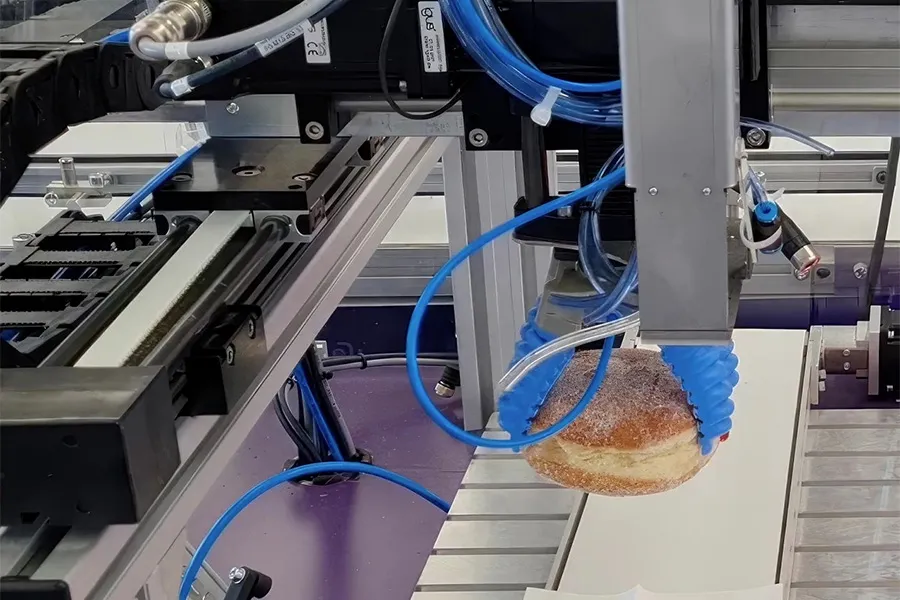
igus RBTX.com
igus GmbH is one of the players in the low-cost automation market. The German family-owned company, based in Cologne, specialises in developing and manufacturing motion plastics: high-performance polymers that require no lubrication and improve performance while reducing costs in the most common motion applications. igus employs 4 600 people worldwide and is represented in 31 countries. In 2022, the company generated sales of 1.15 billion euros. To drive further growth, several start-ups have been set up within the company, covering areas including 3D printing, robot drives and smart plastics for Industry 4.0.
The RBTX platform, dedicated to Lean Robotics, is one of these initiatives. igus robots make it easy for SMEs to take the step into automation without major investment. The ReBeL, for example, can be bought in Germany from 4 970 euros. This robot is made from high-performance plastic and is particularly suitable for tasks such as loading and unloading machines.
With RBTX.com, igus offers a platform that helps companies find the right solution for every application and budget. This online tool connects manufacturers and users of low-cost robotics. More than a hundred partners offer their products on the platform. Using drag and drop, users can combine robots, machine frames, grippers, conveyor belts and more in a 3D model, and even test the movements. In future, these functions will also be available in virtual reality, as igus has already developed a solution with igusverse. No programming knowledge is required.
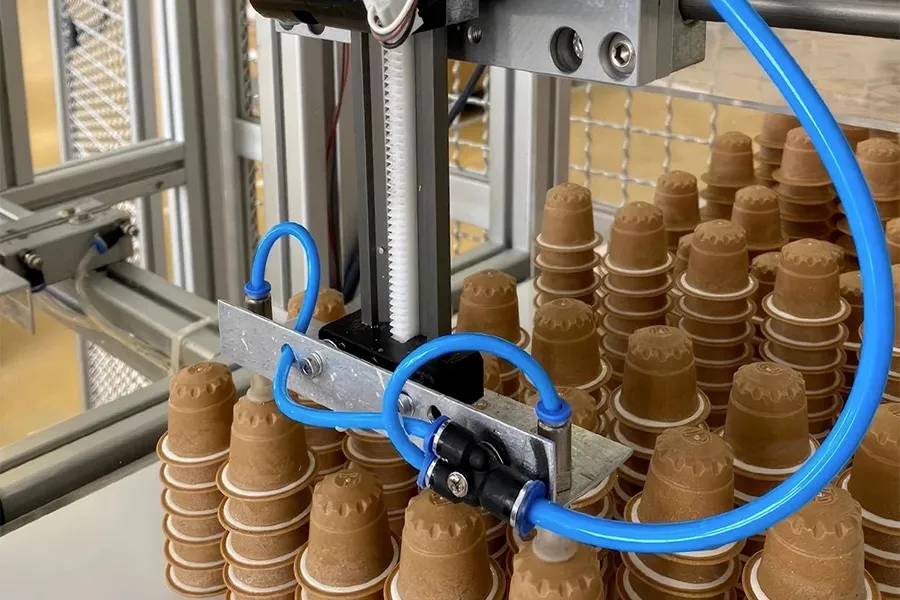
A limited investment
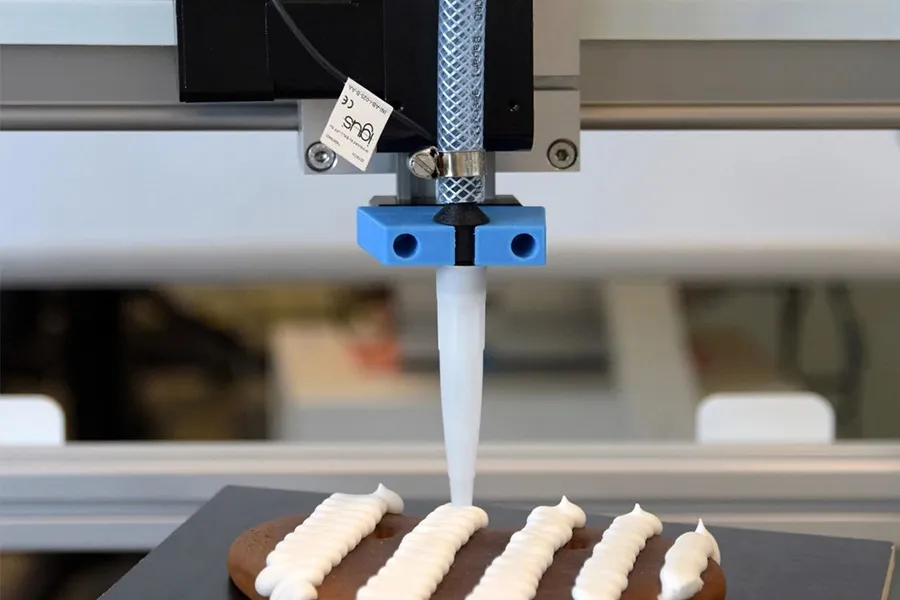
“Today, several thousand SMEs around the world have used RBTX.com to develop and test automation solutions. These users come from a wide range of sectors, from a worm farm to a baker looking to package doughnuts,” explains Alexander Mühlens, head of the Low Cost Automation Business Unit at igus. “In 95% of the more than 400 solutions, the investment was below 12 000 euros. Interest in RBTX has continued to grow since its launch. After all, the platform offers solutions that cost less than those on other well-known, similar platforms. We have advised on more than 2 500 projects and sent several thousand robots to customers.”
“Of course, it should be borne in mind that these less expensive robots are not suitable for every automation task. They do not meet the requirements of applications involving the movement of heavy loads or requiring extreme precision, so other solutions are needed. Nevertheless, many tasks in workshops can be automated cost-effectively. This is happening in SMEs and large companies alike. Businesses are looking to invest as efficiently as possible and keep payback periods as short as possible. RBTX offers users the advantage of finding low-cost robot components from various manufacturers in one place, with a single point of contact, and with a guarantee of price and compatibility. Suppliers can tap into new target groups and sales channels for their products. It is a win-win situation for everyone involved.” ■
Een zakelijke vraag aan igus? Get in touch
Companies in this story
Keep following this
Get an email when a new story is published. No account needed.
- ThemeHigh-performance drives and precise motion
- SubjectSoftware, IT, OT & cybersecurity
- Companyigus