‘Made in Belgium’: a unique innovation in corner presses
Texte Valérie Couplez | Photos Beckhoff Automation
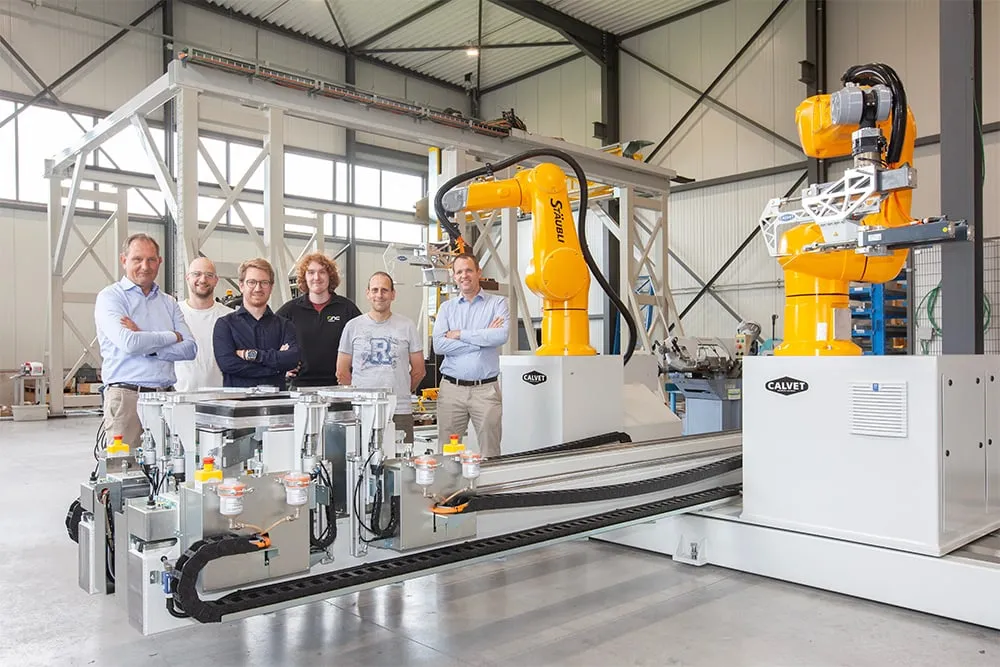
dCross-pollination. That is what happens when two creative machine builders join forces. To further automate the production of aluminium windows and doors, Calvet wanted to develop its own standard machine. CNC Solutions helped develop and implement the concept. Beckhoff technology proved decisive in giving the machine the right feel.
Calvet, which has branches in Zellik and Werkendam (the Netherlands), believes that automation can make industrial processes smarter and more efficient. It has been doing just that for more than 50 years, working with renowned brands while adapting their machines to customers’ specific needs. This time, its ambitions go further. “We mainly supply machines for the production of windows and doors. We want to build a machine that can combine different operations and actions, such as assembly, bonding, pressing and inspection,” explains director Stefan Nees.
Support from West Flanders
To do this, Calvet turned to CNC Solutions in Menin, West Flanders, which also specialises in custom-built machines. Managing director Lander Debruyne explains: “We specialise in CNC (robot) applications. We build machines to control processes such as milling, sanding and sandblasting in a range of materials. We are a fast-growing company offering innovative solutions.” The best evidence? The new building they moved into in Menin 3.5 years ago is already too small. An extension is due to be built at the end of this year. “We’re more than doubling in size. We’re adding 930 m² of production workshop space so we have room to build more machines at the same time. We’ll need it if we add a standard machine,” he says with a wink.
Improving quality with a unique machine
Calvet wants to stand out in the market with this machine. “It will be unique in our sector,” promises Stefan Nees. “A corner press is currently used to build a window. The process still involves a lot of manual steps. In particular, the window must be prepared meticulously so the corner press can do its job. We’re bringing all these steps, assembly, bonding, pressing, inspection and cleaning, together in one central workstation that needs only one operator. This concept will not only increase efficiency, but also improve the quality of the finish.” Calvet and CNC Solutions have been working together on the project for four years now. Stefan Nees says that Lander Debruyne and his team have made a crucial contribution. “We were stuck in our own concept. Their clear technical vision gave us a different perspective. By combining their innovative ideas with our experience of how a corner press works, we managed to bring our approach to life,” explains Stefan Nees.
A sensitive gripper
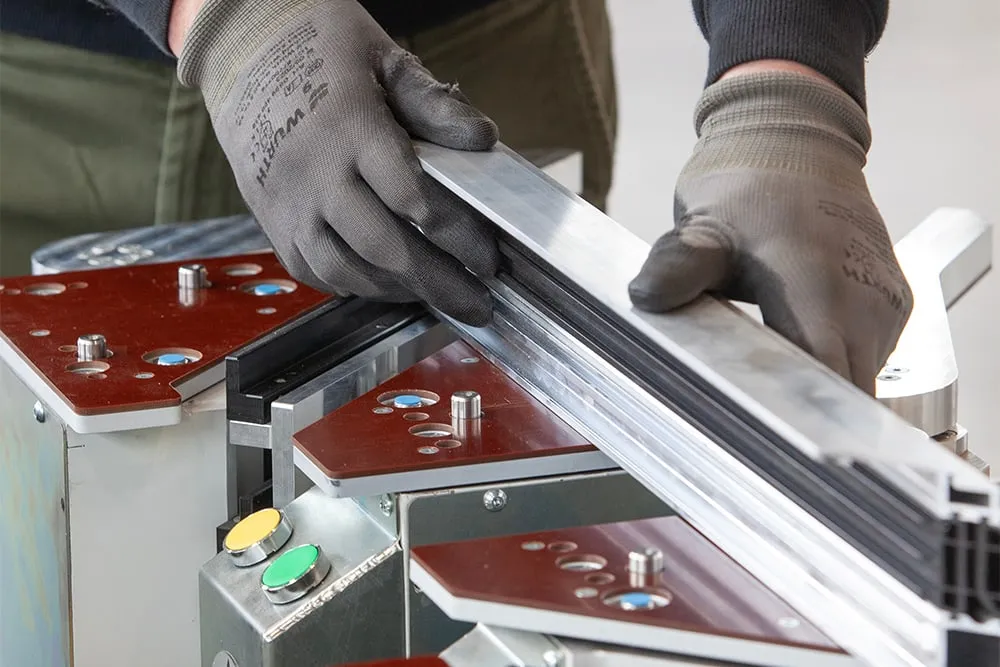
Flexibility was at the top of the machine’s list of requirements. It had to handle different types of profiles, sizes, press positions and bonding techniques. Two six-axis robots therefore form the heart of the installation. The robots adjust their position to suit sizes ranging from 300 to 4500 mm. They can also automatically change grippers depending on the production stage. “What makes it unique is the gripper specially developed for pressing the corners. This is where Calvet’s craftsmanship comes into play,” explains Lander Debruyne. Smart technology from Beckhoff Automation was also needed. “The new AA3000 electric cylinders have enabled us to give the machine a feel for the job. The operator prepares the frame on one of the trolleys. A sensor connected to the actuator checks whether all the parts fit together correctly before clamping and pressing. It’s like holding an egg: you pick it up without breaking it. This built-in intuition is one of the reasons we have raised the bar so much in terms of quality.”
A logical choice
It is no coincidence that this machine uses Beckhoff technology. It is not limited to the electric cylinders: the machine already has nearly 300 I/O modules. Lander Debruyne explains: “Two years ago, we chose the Beckhoff platform, with the CX2043 embedded PC as standard for control, because we were constantly running into availability issues with our previous supplier. Choosing Staübli robots made Beckhoff the logical choice. Both use EtherCAT and are on the same wavelength in terms of technology and mindset. Switching control technology is no small matter. Fortunately, we can count on application engineer Maarten Knevels. Thanks in part to his support, we now have around seven machines in the field equipped with Beckhoff controls.” Beckhoff is expanding its service offering with application engineers. They help new customers get started and help existing customers implement new technologies.
Programming fifteen CNC axes
The challenge in this project lay precisely in all the programming involved. “In addition to the robots, the machine has fifteen CNC axes. We have synchronised all the inputs from the controller, robot, sensors and motors. We use a multi-axis servo drive system. This allows for a very compact design: a single power supply module is enough to handle communications, power supply and electronics. The motor modules, AX8000 servo technology and AM8000 motors, simply clip into place. Add Beckhoff’s single-cable technology and you get less wiring and a smaller control cabinet,” says Lander Debruyne. Safety was also a priority. Thanks to the integration of safe motion technology, there is no need for barriers around the robots. “The safety scanners tell the controller when someone enters the area. The machine then slows down or stops completely, depending on the zone the person has entered.”
Ready for real-world use
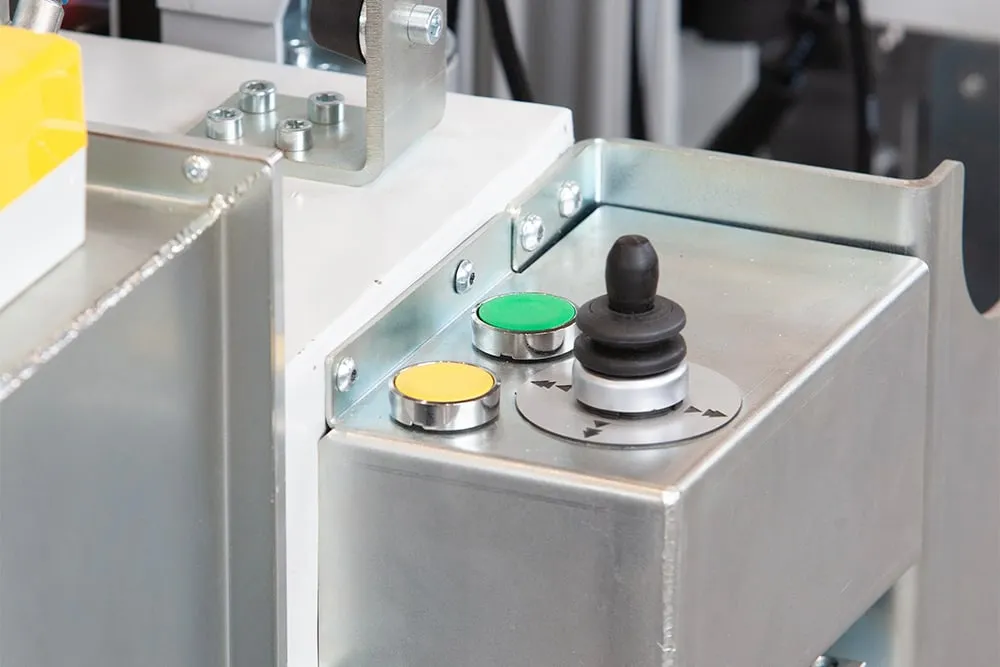
All the programming work is now complete. The first prototype is ready to be shipped to a customer in Brussels. One striking feature is the large screen beside it. “The operator can follow everything on it. For us, Industry 4.0 means making complex technology as simple and intuitive as possible. The operator scans the barcode and sees the steps they need to follow. They have just two buttons to move to the next or previous step. It could hardly be simpler. The goal now is to test the machine extensively in practice. This experience will help us refine a truly standard machine. We’re convinced there’s a market for it. Wherever labour costs are high, automation is the answer,” concludes Stefan Nees.
Een zakelijke vraag aan Beckhoff Automation? Get in touch
Companies in this story

Keep following this
Get an email when a new story is published. No account needed.
- SubjectServices & solutions
- CompanyBeckhoff Automation