Revision of a key functional safety standard: publication of the new edition of ISO 13849-1
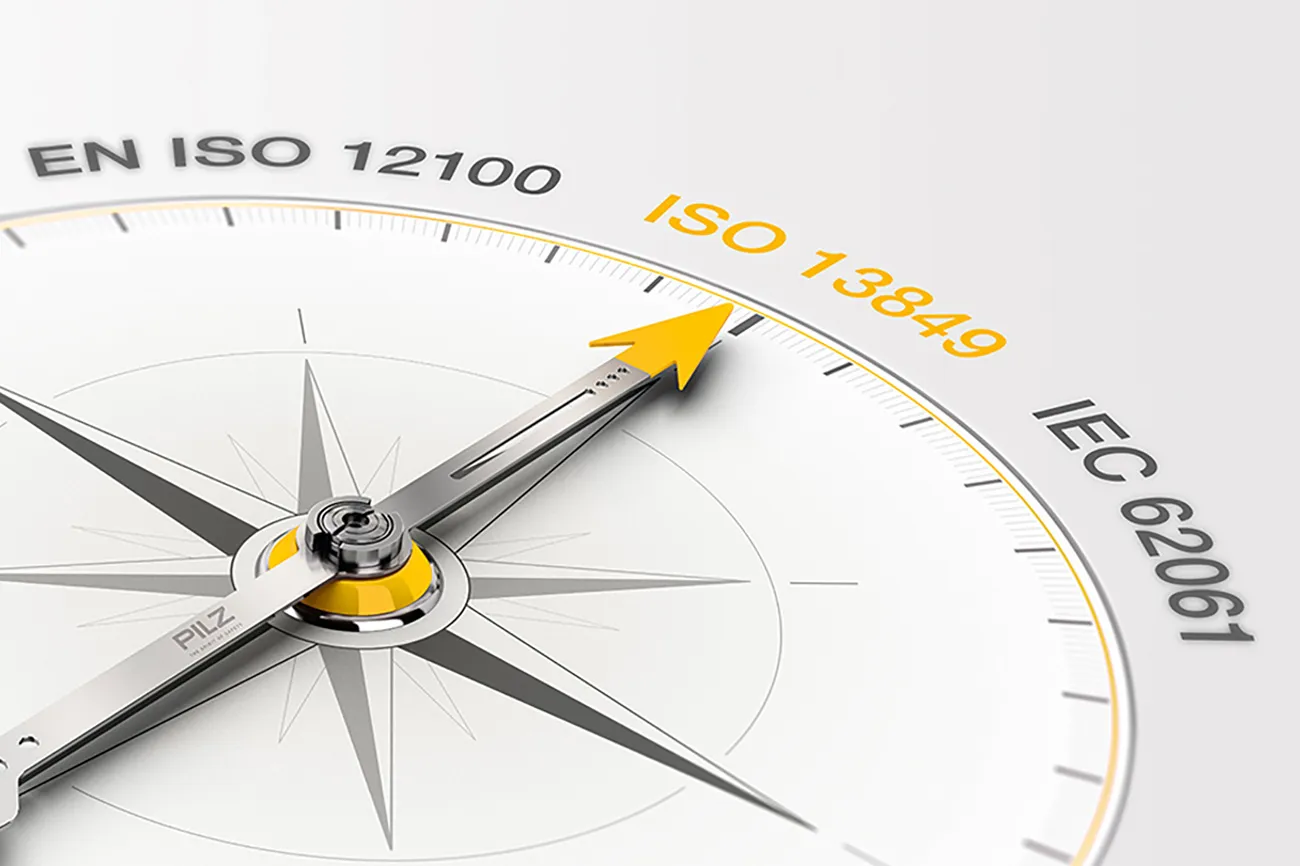
The International Organization for Standardization (ISO) published the new edition of ISO 13849-1 on 27 April 2023. This is one of the key safety standards for designing safety-related control systems for machinery. The new edition sets out a series of guidelines in greater detail, for example on determining the performance level, and therefore provides better support for implementation. It also reflects the growing importance of software and validation. Standards experts at automation company Pilz recommend that machinery and plant manufacturers and operators familiarise themselves with the forthcoming changes well in advance.
Along with IEC 62061, ISO 13849-1, “Safety of machinery, Safety-related parts of control systems, Part 1: General principles for design”, is the most important functional safety standard in mechanical engineering. Compared with the previous edition, it now provides more detailed guidance on the risk parameters used to determine the required Performance Level (PLr), enabling the required level of risk reduction to be classified in stages.
The standard now uses five factors to explain how hazards can be avoided and how the probability of their occurrence can be determined. These factors include the speed at which a hazard arises, for example, rapidly or slowly, and whether it can be avoided, for instance by escaping. Machinery manufacturers and operators must take these changes into account when classifying the risk associated with their risk-reduction measures. Machinery manufacturers also benefit from greater flexibility: each safety function can be implemented by combining several subsystems. These may be subsystems already validated by the manufacturer, or new subsystems designed by the machinery manufacturer or integrator.
New requirements for application software
One important aspect is the requirements for software and functional safety management, particularly for Safety Related Application Software (SRASW). The standard provides specific guidance on how the software design and validation process should be organised according to the performance level.
Support with implementation
The next step is harmonisation with the European standard EN ISO 13849-1. It is not yet known whether there will be a transition period before mandatory application, or how long it might last. “ISO 13849-1 is not entirely new, but machinery manufacturers and operators should familiarise themselves with the forthcoming changes well in advance,” says Jürgen Bukowski of the Pilz International Service group. “These changes have clear implications for designing safe machinery. With a little guidance and practice, many specifications can be reused.” Automation company Pilz contributed to the development of the draft standard. Pilz experts provide support to help ensure successful implementation of the new legal requirements. To this end, the safety automation expert offers services tailored to each phase of a machine’s lifecycle and also shares its expertise through a comprehensive, certified functional safety training programme.
Our training courses:
Een zakelijke vraag aan Pilz Belgium? Get in touch
Companies in this story
Keep following this
Get an email when a new story is published. No account needed.
- ThemeSafe and compliant machinery
- SubjectNews
- CompanyPilz Belgium