Investing in 3D printing: a win-win?
Texte Flam3D | Photos iStock

Investment in industrial 3D printing is booming. Several billion dollars have been invested over the past two years, with the influx of funding benefiting the newest companies. What does this look like in practice today, and what does the future hold for this industry, which is attracting growing interest from investors?
Let’s go back more than a decade, to early 2010. This was a time of great excitement and media hype around 3D printing, following the expiry of several patents. The technology was set to bring 3D printers into every home, allowing consumers to make 3D-printed objects at the click of a button. The hype attracted attention: new companies flooded the market and invested millions in 3D printers. Shares in the two largest 3D printer manufacturers, 3D Systems and Stratasys, soared. 3D printing seemed to be on the cusp of a technological revolution.
Premature enthusiasm
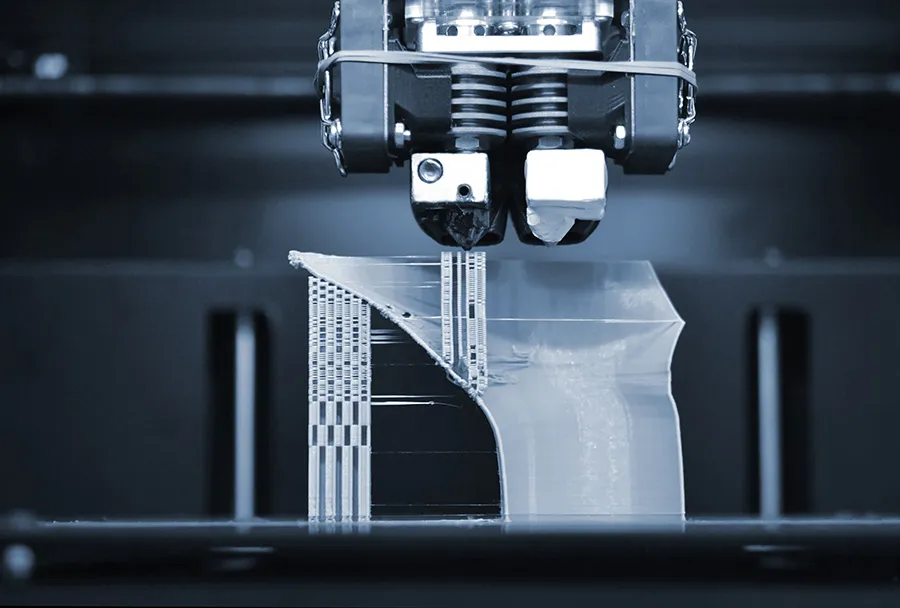
But the enthusiasm was premature: interest in consumer 3D printers failed to take off, at least not in the user-friendly way some had expected. More importantly, no critical application was ever really developed that would enable people to 3D print at home. As a result, the consumer 3D printer market contracted between 2014 and 2016. Many companies, particularly manufacturers of small ‘desktop’ 3D printers, struggled, and their share prices fell.
The era of industrial 3D printing
Back to (almost) the present: according to market research firm Smartech Publishing, the 3D printing sector grew by 24% in 2018 to reach $9.3 billion. In 2019, the market grew to $10.4 billion, passing the double-digit billion-dollar mark for the first time in the 40-year history of the 3D printing industry. Even in 2020, the year of coronavirus, growth of between 5 and 10% was reported, and all analysts expect continued growth in the years ahead. What is driving this resurgence? Industrial 3D printing.
Already in practice
While the vision of a consumer market for 3D printing has yet to live up to its promise, 3D printing is emerging as a promising technology for industrial manufacturing. It speeds up product development and increasingly enables the production of end-use parts. Demanding industries such as automotive, aerospace, medical and mechanical engineering are installing 3D printers and putting plastic and metal printed parts to practical use.
Automotive giant Volkswagen announced the creation of a digital manufacturing and 3D printing centre in late 2018. The company unveiled a detailed roadmap and announced that it would 3D print between 50 000 and 100 000 functional parts the size of a football each year by 2021.
AM and serial production
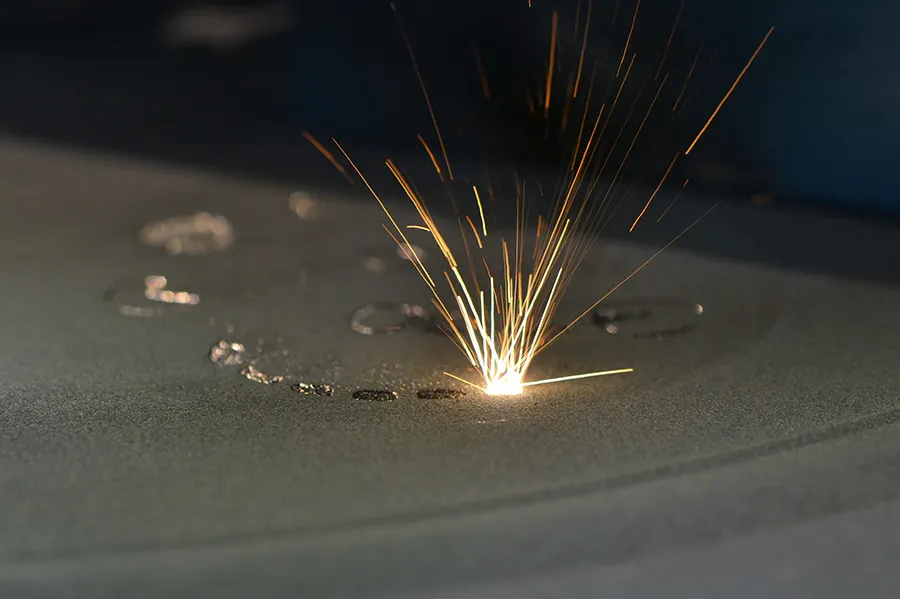
According to 3D printing analyst Terry Wohlers, close to $1.5 billion was spent on 3D printing end-use parts worldwide in 2019. In 2016, the figure stood at $600 million. It therefore more than doubled in three years. A survey of the Benelux market conducted in late 2020 points in the same direction: prototyping remains an important 3D printing application, but the break-even point, from which additive manufacturing becomes the most cost-effective option, is steadily shifting towards serial production. To make progress in print speed, material choice and machine costs, the companies developing the technology need substantial funding. And they seem to be getting it.
Unsurprisingly, the potential of 3D printing, now focused on real-world industrial applications, is becoming very attractive to investors.
A complementary technology
However, it is important not to fall into the same trap as during the consumer 3D printing boom. Industrial 3D printing will not replace conventional manufacturing methods, at least not in the short term. Rather, it is a complementary technology that offers new design possibilities, enables new applications and reduces production costs.
Flemish and Dutch manufacturing companies are also beginning to realise this. There is a strong willingness to invest in the technology: the Flam3D survey in Flanders and the Netherlands shows that 80% of manufacturing companies want to invest in additional or new printing systems, just under half want to acquire 3D printing software, and around 30% want to buy in external expertise …
Ready for growth
Access to funding often seems to be a bottleneck for growth in the Benelux: several promising start-ups are poised for rapid growth, but often struggle to secure the funding they need, and when they do, it is in limited amounts. Yet some clearly have global potential. The 3D printing industry is growing significantly, and the sector, currently worth close to $12 billion, is expected to continue expanding. Major players see serious potential, and the arrival of companies such as HP, BASF and GE signals an intention to disrupt the global manufacturing market as the technology advances. Now that the way is clear for 3D printing, it makes sense for securing funding to become an important part of the journey. The landscape is more competitive than ever, but it offers opportunities to develop and grow new business processes and strategies, with investors keeping a close eye on developments.
As a neutral industry organisation, Flam3D provides access to a portfolio of start-ups and scale-ups active in 3D printing. Looking for information or partners? Get in touch. ■
Question about this story? Ask your question
Keep following this
Get an email when a new story is published. No account needed.
- SubjectNews