Automating rose propagation with the VTUX valve terminal
Texte Festo | Photos Festo
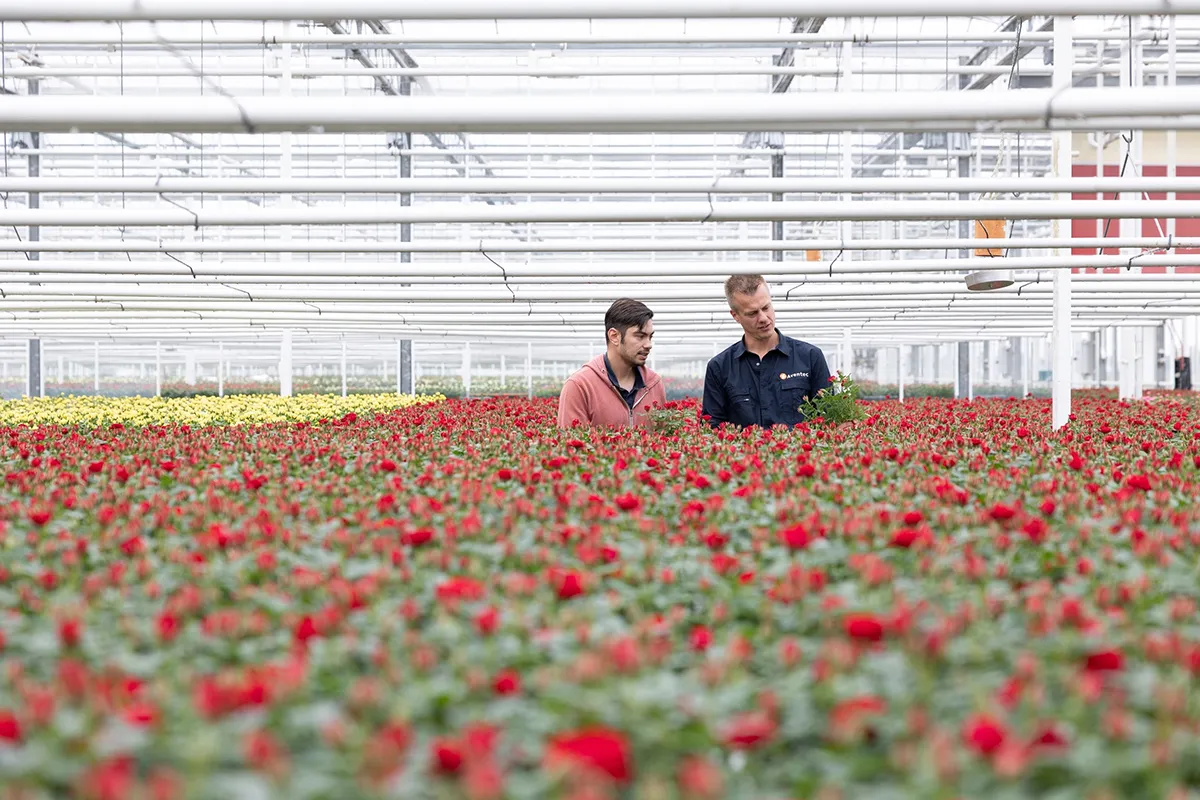
Robotic rose propagation is nothing new, but Aventec founder John Van de Ven is taking it a step further. Working with Festo, he is putting the latest technologies and innovations into practice. The VTUX valve terminal plays a key role.
As an electrical engineer, Mr Van de Ven knows robots and image processing inside out. Through Aventec, he automates a range of processes. When the company was founded in 2013, he mainly worked in interim project management. Today, he is increasingly focused on innovation in horticulture.
The breakthrough came when former clients of his previous employer, a company that had since ceased trading, got in touch. They were using a machine to take cuttings from potted roses, but it urgently needed maintenance. Before long, the maintenance work had turned into a much larger development project. An initial assessment showed that more needed to be done. Mr Van de Ven saw the opportunities and began working on improvements.
“To keep these cutting machines running, they needed to be refurbished with new components. Many of the parts had reached the end of their service life. We therefore decided to rebuild the machine using modern servo technology controlled by Festo’s CPX-E plc platform, together with a modern vision system.” Many parts had to be completely reprogrammed to create a fast, reliable machine that customers could depend on for years to come.
Greater speed and accuracy with new technology
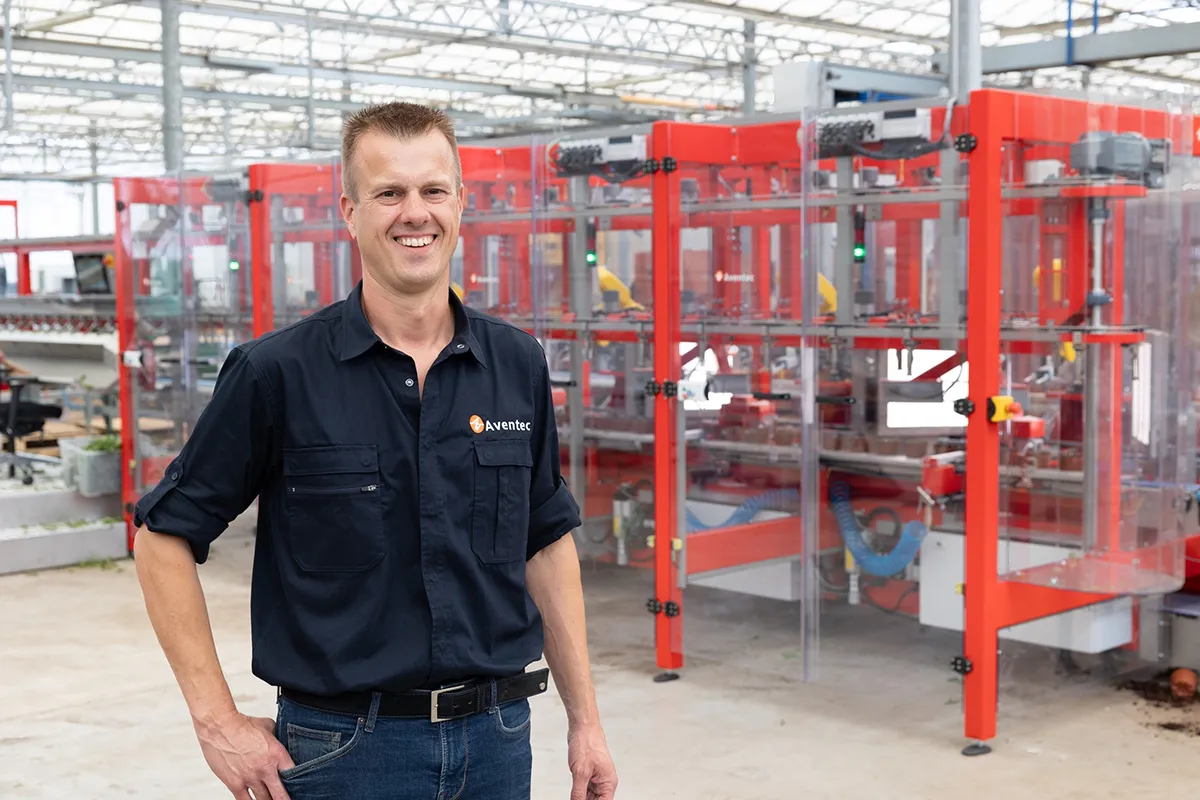
To improve control over deliveries and machine reliability, he decided to build the machines entirely in-house. But just how complex is a machine like this? The process starts with rose stems being hung manually on a conveyor system. Each cutting is suspended in a holder and transported to a processing cell. There, the vision system rotates the cuttings through 180° for a 3D scan, selecting the best ones. A robot then cuts them to the correct size and plants them directly into a new pot. This is done at high speed and with extreme precision. With four cutting stations, the machine delivers impressive output: up to 5,200 cuttings are cut and planted per hour.
During the machine’s development, John van de Ven got in touch with Festo. “They helped me from the outset with selecting and integrating the different disciplines. Rotation and cutting were particularly challenging. To see how we could achieve this using Festo components, we sent rose stems and their holders to Festo’s development centre in Delft. A week later, I received a video update. I was amazed at how quickly they had made progress! We then built a test module with Festo components and invited our customer to see the results for themselves.”
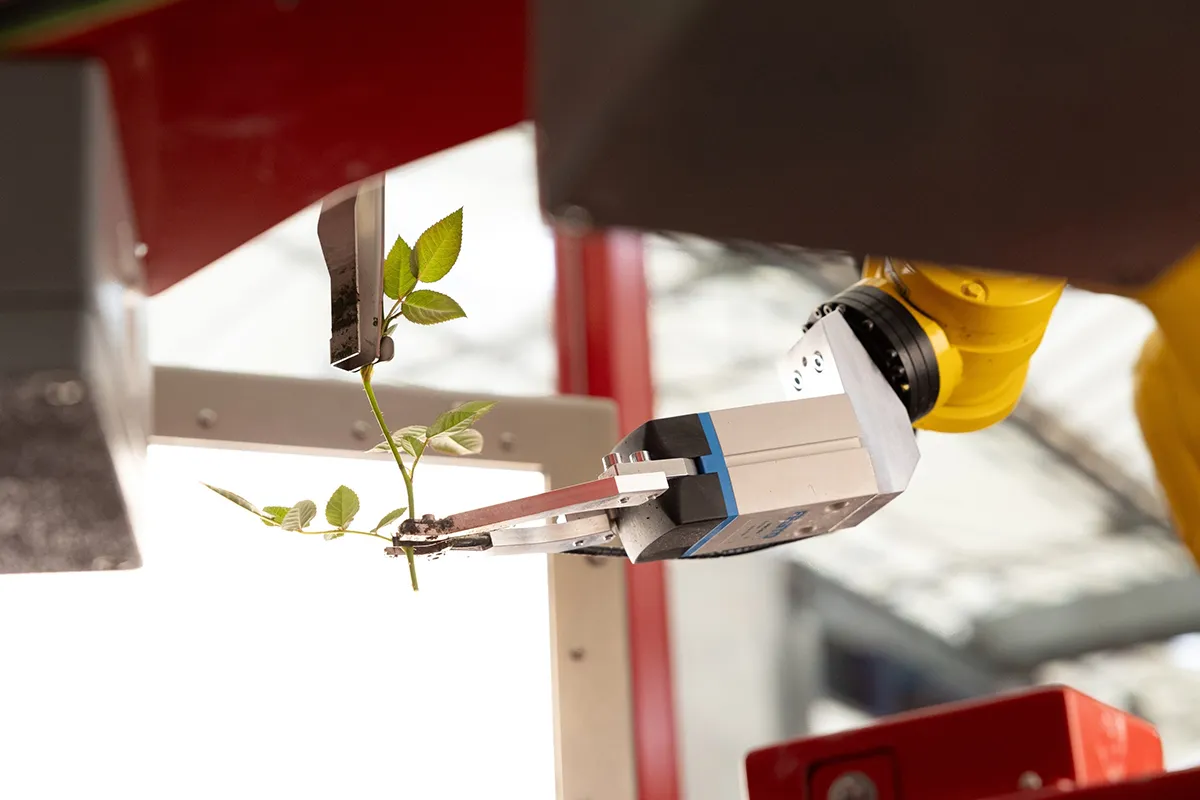
“I use Festo wherever possible”
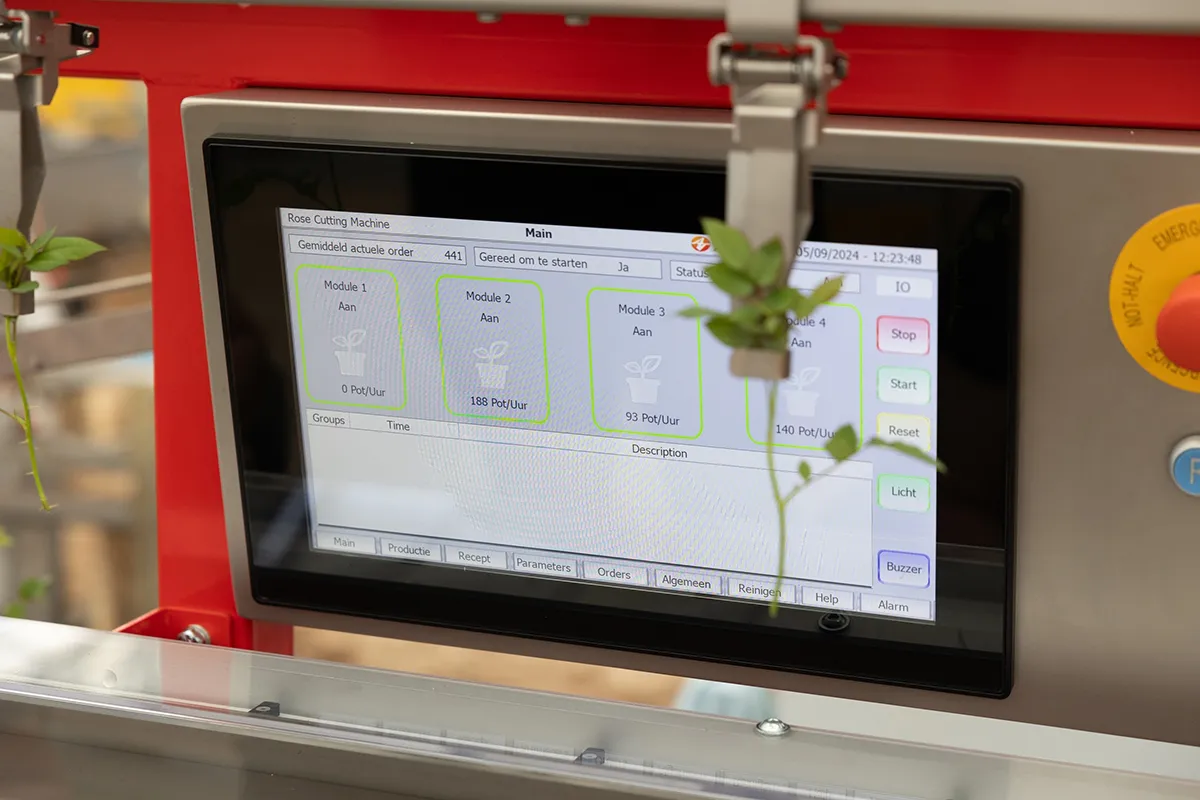
Mr Van de Ven wants to source as many components as possible from a single supplier. “Wherever possible, I choose Festo. Otherwise, suppliers may blame each other if something goes wrong, leaving the end customer to suffer. The modules now include linear guides, pneumatic systems, PLCs, an HMI and Festo valve terminals. The first fully converted machine is now running with the new modules. Each module has its own PLC to provide the processing power needed for image processing. For the main control system, we use an HMI and new valve terminals. Festo kept improving its products during development, which allowed us to move smoothly to its latest HMI. Converting from the previous generation was surprisingly easy. The work we had done at the time transferred over with no problems. The platform is now faster and more efficient, and we have retained the same structure.” Mr Van de Ven greatly appreciates Festo’s support. “Festo takes the need for a specific solution into account. Why use a stepper motor when a pneumatic system can do the same thing?
Major design benefits
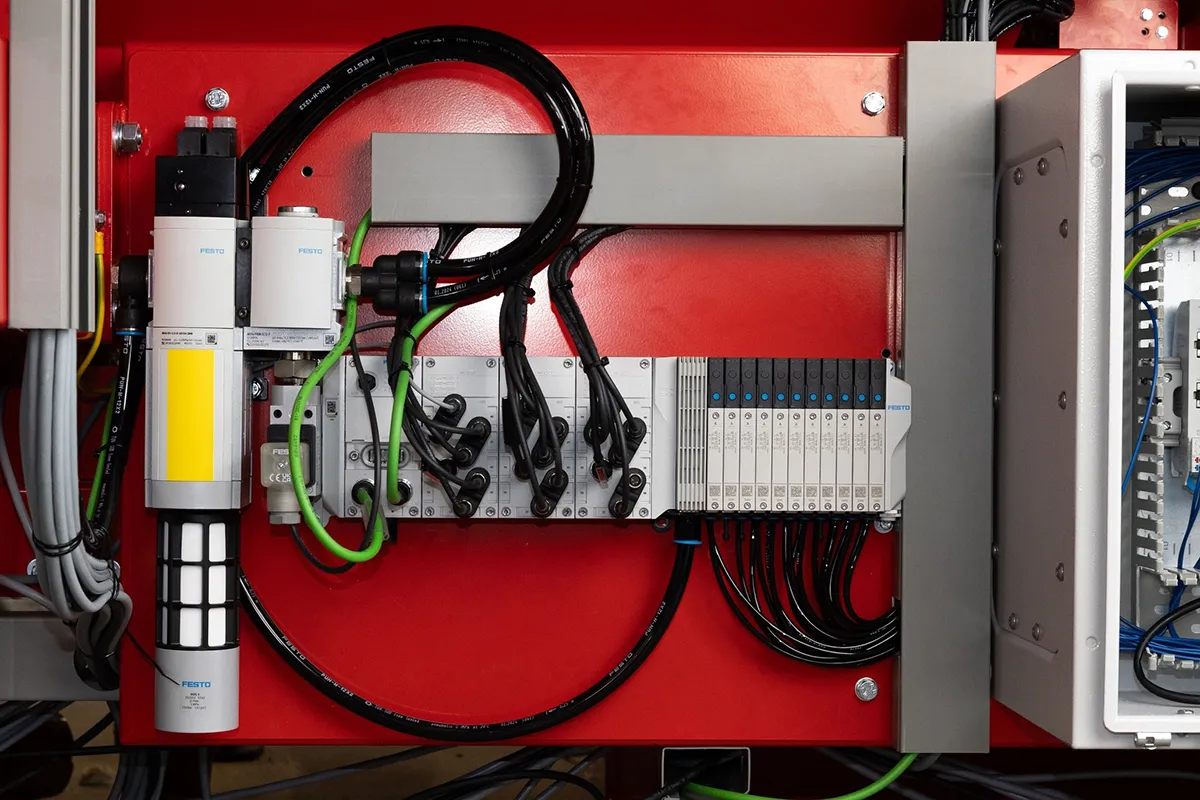
One of the most notable components of the rose-cutting machine is Festo’s new VTUX valve terminal. Jeroen Holt of Festo explains what makes this technology so special. “One of the valve terminal’s main advantages is that it is equally well suited to decentralised and centralised machine configurations. In this case, control is decentralised, so the terminal does not need to be concealed in a separate control cabinet. Its IP rating means it can be installed in open areas. It is also more compact than its predecessors, with a much smaller installation footprint, offering numerous design benefits.”
Mr Van de Ven deliberately chose decentralised control to reduce the machine’s wiring. “You can place connection points closer to the sensors, which means you need fewer I/O points in the control cabinet. This saves space and labour. Also, if a cable needs replacing, you do not have to route it through a cable duct in the cabinet. You can access the VTUX valve terminal directly.”
Mr Van de Ven began development using the VTUX’s predecessor, the VTUG. “It had an aluminium base plate and could be dismantled piece by piece. The VTUX is a major step forward and the future of valve terminals,” he agrees. “It is more versatile and lighter.”
Thanks to the internal serial connection, it is now possible to assign up to 128 valve functions. “There is no longer any need to wire each valve and sensor separately. A single connection for air, power and communication is enough. Where we previously needed two control cabinets, now we only need one. Decentralised control lets us control everything separately. It works really well.”
Time savings are the biggest benefit
Mr Van de Ven believes the greatest benefit is the time saved. “We save hours of work, so the investment pays for itself very quickly.” Alongside efficiency, Mr Holt and Mr Van de Ven highlight the benefits of data communication. Festo’s new CPX-AP-A automation platform
offers various communication options for fast, error-free I/O between components, as well as advanced diagnostic functions. Mr Holt explains: “If a cable breaks somewhere, for example at a sensor, you can immediately see where the problem is.”
The system is also easy to use. “All the tags are read automatically into the VTUX, so you just have to assign them yourself,” explains Mr Holt. Mr Van de Ven uses nine of these valve terminals in each machine: each rose-cutting module has one at the top, one at the bottom and a third on the main unit.
Speed often determines the required force and stroke, but contamination also plays a part. In a dusty working environment, a cylinder needs to be resistant to contamination. With its IP67 rating, the VTUX provides exactly this protection, an important and distinctive factor in this application’s operating conditions.
Mr Van de Ven was one of the first customers to use the VTUX, in November 2023. “When Festo develops something new, I have no hesitation about using it straight away. I visited the factory in Esslingen and saw how thoroughly everything is tested. That gives me complete confidence in the Festo team.”
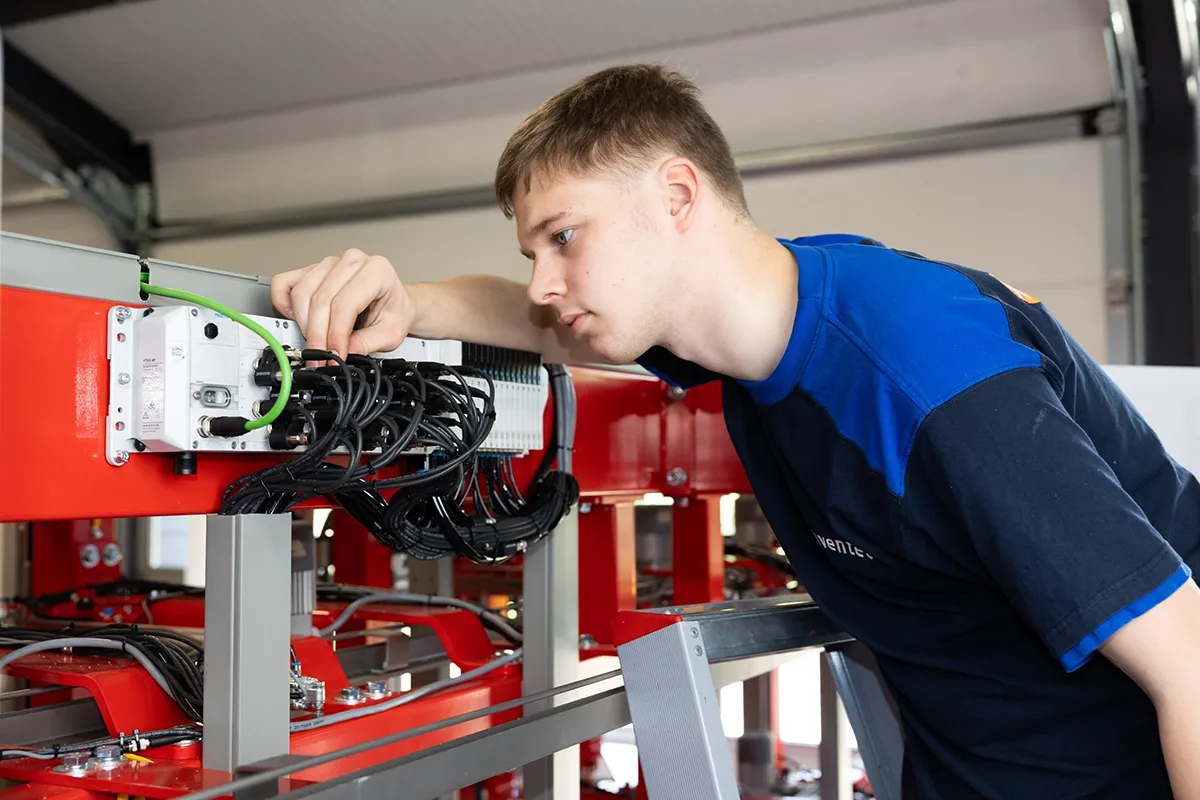
Co-operation with Mr Holt also runs smoothly. “I specify what I need and Jeroen shows me what is possible. We look at the whole machine together, decide what we want, and he comes back with answers and further information. The machine needs to be serviceable in ten years’ time, so longevity is an important consideration. Jeroen helps us think about future developments.” Mr Holt agrees. “Being involved in the thinking is really important. I know the whole process, and we start with a basic idea and a set of open questions. That’s what I enjoy doing.”
Mr Van de Ven is clearly satisfied. “We developed our own algorithm to speed up the process. To do that, we needed more processing power than the old system could provide, and we have more than achieved that. We also wanted two unique processes to run simultaneously without affecting each other. We solved this by creating two separate queues, each with its own core in the API. Cycle time remains key. We are currently at four milliseconds, but our target is two milliseconds.”
A business enquiry for Festo? Get in touch
Companies in this story

Keep following this
Get an email when a new story is published. No account needed.
- ThemeFlexible robotics and autonomous logistics
- SubjectNews
- CompanyFesto