Three digital trends in variable frequency drives
Texte WEG | Photos iStock et WEG
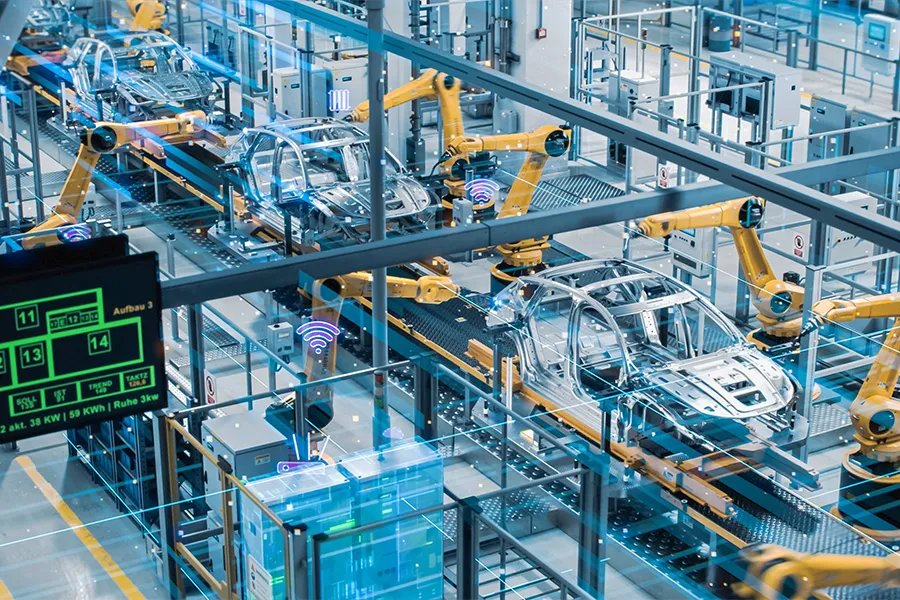
According to PwC, 98% of European industrial companies plan to boost efficiency through digital technologies, predictive maintenance or AR (augmented reality) solutions. But how can variable frequency drives be integrated?
Many manufacturers are working to create “smart” factories. One crucial factor is the integration of intelligent motor controls. Many new variable frequency drives have their own programming in the form of an integrated PLC, enabling control systems to be monitored over a network and programmes to be run. Price comparisons are also appealing, as intelligent variable frequency drives offer a cost-effective way to integrate the latest Industry 4.0 technology. The productivity benefits are numerous, including improved operational efficiency and quality control, intelligent machine optimisation, remote or wireless diagnostics, and predictive maintenance.
Communication
Virtually all variable frequency drives come with integrated serial communications as standard. Put simply, this sends a series of digital pulses to a variable frequency drive, which interprets them to execute commands and, where appropriate, send a feedback signal. The hardware typically uses wireless technology or fibre-optic cables.
Choosing the right communications protocol also requires careful consideration to avoid signal conflicts. There are many options, and the application is usually the deciding factor. Take Ethernet, for example. Variable frequency drives with standard Ethernet connectivity are increasingly common in factory automation. They can also connect to the MES network and exchange data in both directions. Such a configuration ultimately provides a gateway to other connected automation components in the factory.
Open fieldbus systems should also be considered. Data can be exchanged between system components over long distances and under extreme loads. Available fieldbus systems include PROFIBUS, CAN-bus, DeviceNet, BACnet and Modbus, most of which have Ethernet variants.
Wireless diagnostics
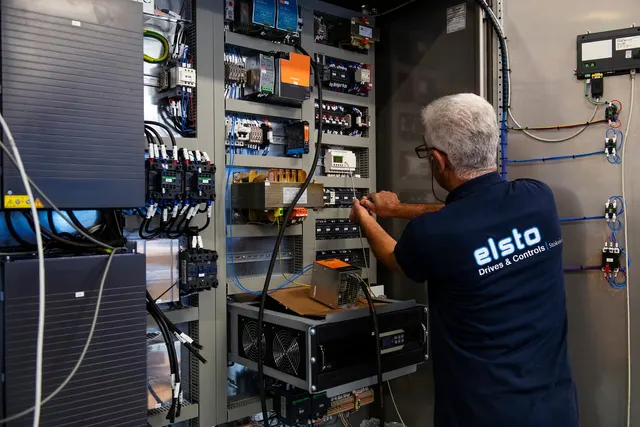
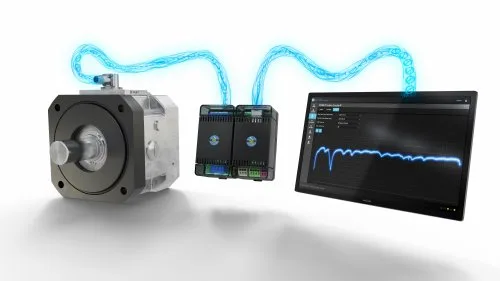
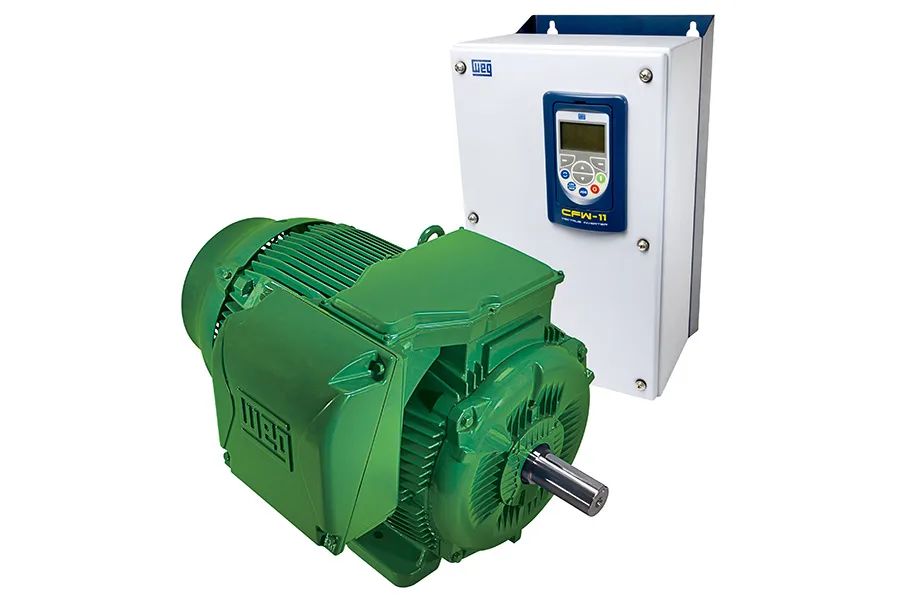
Wireless diagnostics, via Wi-Fi, Bluetooth or another wireless technology, are the future of variable frequency drives. This is good news for maintenance teams, as enclosures are often difficult to access. Using the control system’s integrated wireless signal, technicians can now connect to the system remotely. This connection allows them to view and diagnose faults without physical contact. Diagnostic data collected wirelessly can also support predictive maintenance strategies. Some variable frequency drive models have a server that monitors application continuity using a timestamped motor or control-specific data. In addition, if an application fails, motor and control data can be shared with a master PLC.
Variable frequency drives can provide various data on when a failure occurred, such as motor current, motor torque, bus voltage, and the thermal state of the motor or control system. With this data to hand, technicians can carry out a full analysis to find the root cause. The information collected can be used to trigger relevant alarms or warnings if application data exceeds a specified limit. This strategy can be used to stop the application and resolve potential problems before the system fails.
A practical example
Take a fan as a practical example. The latest generation of variable frequency drives features algorithms that can monitor the performance of consumables such as fans and predict their service life using data such as temperature, speed and operating hours. The maintenance team can use this information to repair or replace the fan, if necessary, during a routine maintenance period.
90% of the industrial companies surveyed by PwC said that digitalisation presented more opportunities than risks. By selecting the right variable frequency drives, companies can make full use of digital technology, including integrated MES, predictive maintenance and AR solutions, to develop and expand their production capabilities.
Een zakelijke vraag aan WEG Benelux S.A.? Get in touch
Companies in this story

Keep following this
Get an email when a new story is published. No account needed.
- ThemeHigh-performance drives and precise motion
- SubjectMotion & drives
- CompanyWEG Benelux S.A.