“The future of motion control is open, scalable and data-driven”
Texte Valérie Couplez | Photos Schneider Electric
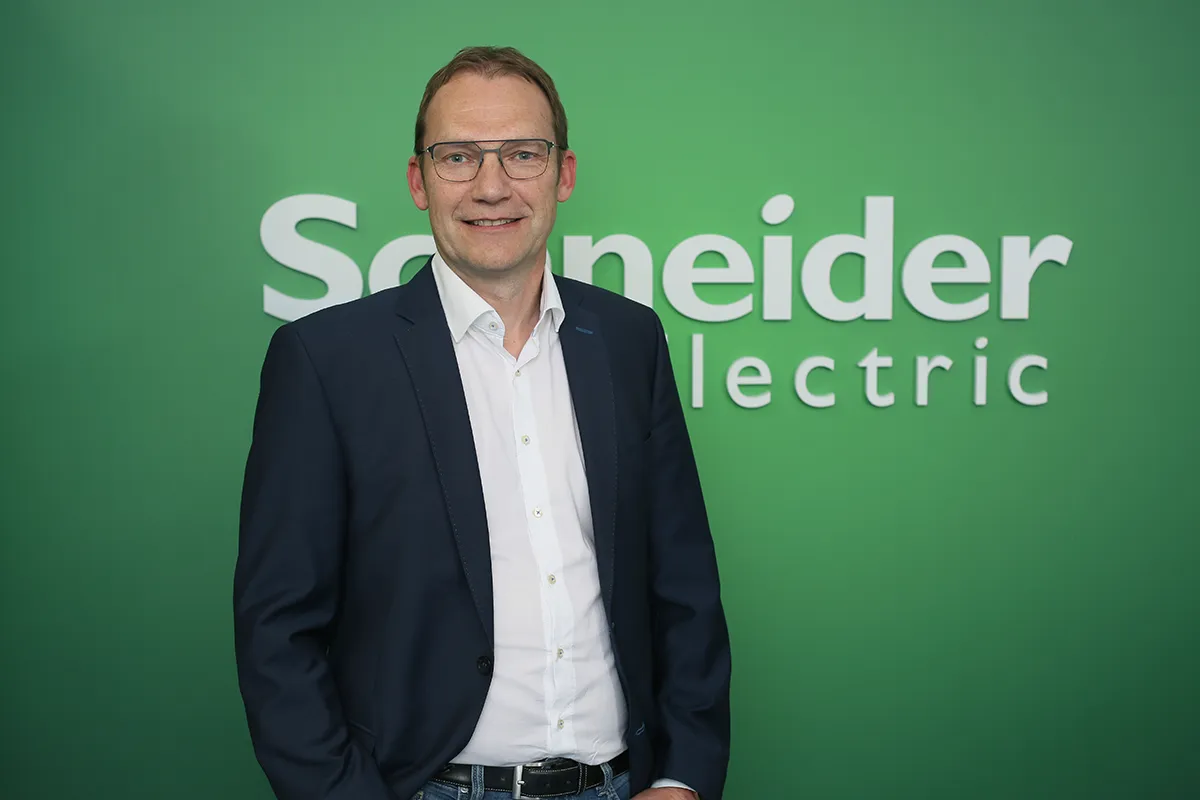
Industrial automation is evolving at a rapid pace. And it has to: the challenges facing machine builders and end users are significant. Machines need to be more energy-efficient, offer greater flexibility, reach the market faster and, if possible, meet all cybersecurity and sustainability requirements. “Motion control has therefore become even more crucial. But it is no longer purely mechanical, as it once was. Today, it involves advanced, complex systems that combine hardware and software. The future of motion control is open, scalable and data-driven,” says Jochen Weiland, Vice President of Motion Control at Schneider Electric.
He works at Schneider Electric’s Marktheidenfeld site in Germany, its innovation centre for motion control technology. He and his team regularly welcome customers from Belgium and the Netherlands to work together on building this future. “We firmly believe in standardisation and open systems. For years, we have chosen open standards to develop our automation architecture. We are currently redefining our portfolio so that users can work in a single engineering environment, with a unified control platform and I/O system, as well as a system approach that meets the needs of machine builders and end users, whatever their requirements. Whether they use existing or new technologies, this will make it easy for users to scale up when they want to add functionality to their machines.”
Seamless integration of motion and data
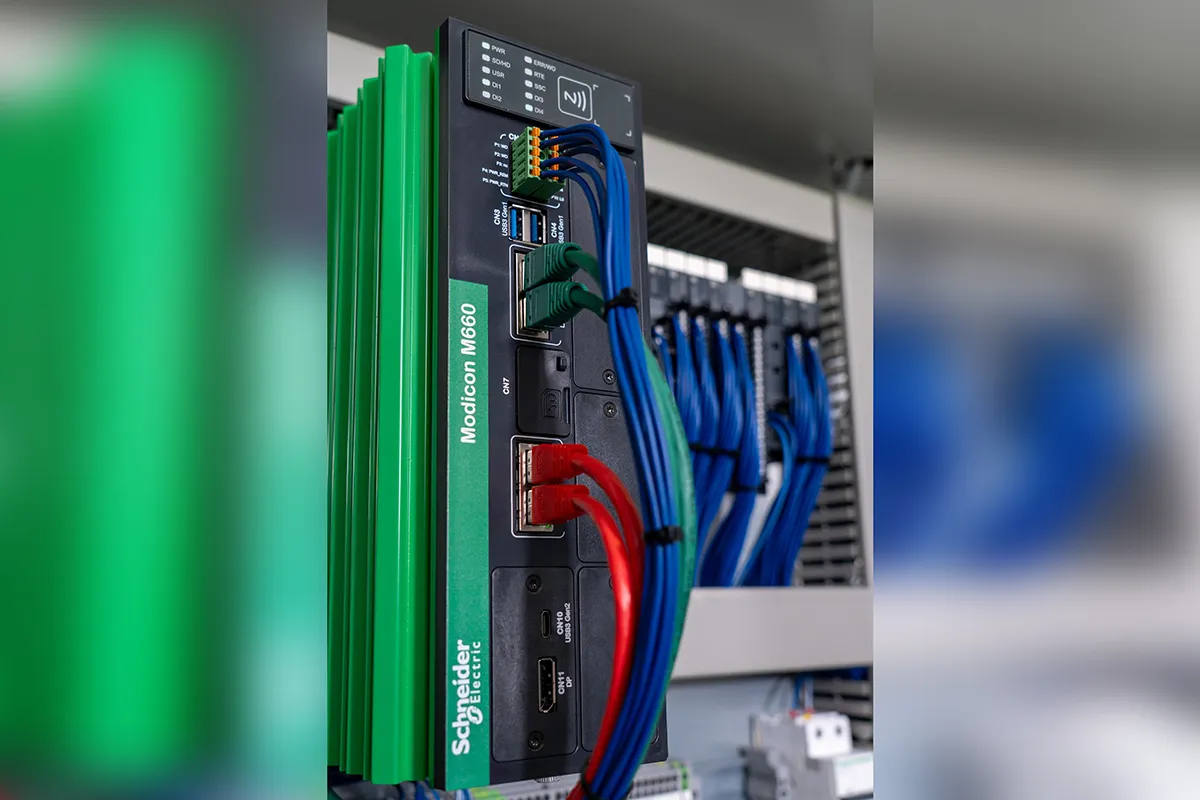
The first example of this new approach is already on the market: the innovative Modicon M660 controller. It has been particularly well received by companies that have already adopted it. “That’s because the Modicon M660 is much more than a state-of-the-art controller offering slightly better performance than the previous generation. It is a radically innovative approach that combines motion control, edge computing and cybersecurity in a single device. This enables seamless integration of control, data processing and real-time communication. The approach was also developed in response to customer feedback.” To make this possible, Schneider Electric is pioneering a 64-bit runtime system. “This allows us to take a further step forward in computing power and speed.”
Digital twins
This provides an ideal foundation for implementing even the most advanced motion control applications. But how do you programme them? Schneider Electric’s answer is EcoStruxure Automation Expert, Motion Module. “It is the engineering environment of the future, because it already integrates all the tools you need. This direct integration gives you immediate access to all the data needed to build more digitalised machines.” Jochen Weiland highlights two of these tools: artificial intelligence and digital twins. “A digital twin lets a customer design and optimise a machine without having to build a prototype. For our customers who already use one, this saves 30 to 60% of the time. It also requires fewer materials, helping to reduce costs and the carbon footprint.” EcoStruxure Automation Expert also stands out for its scalability. “The knowledge customers have already built up in the environment is retained. And it is easy to add new software if you want to expand the machine’s functionality later.
New I/O system
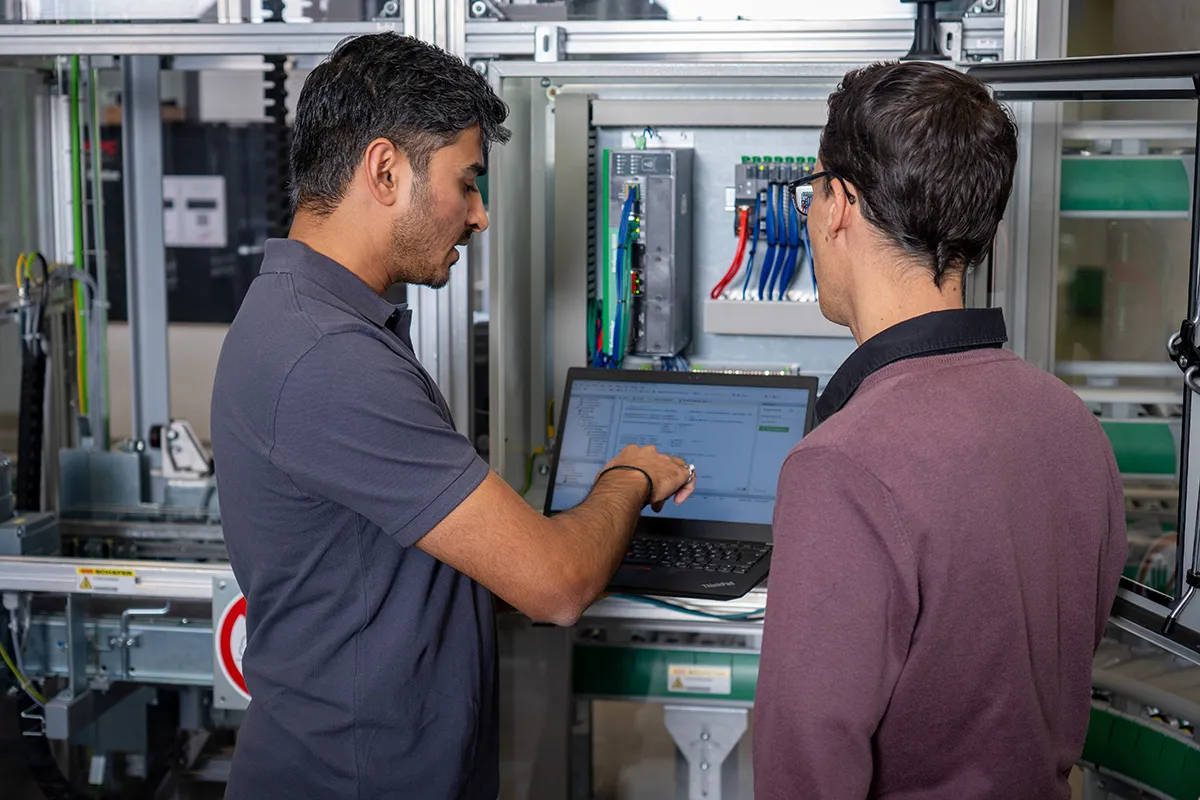
The third part of the story is the I/O system. “In the past, signals simply came out as they went in. But today, your I/O system plays a central role in capturing all the data within your machine and communicating it externally. With Modicon Edge I/O NTS, we have developed a solution that already meets the requirements of the Cyber Resilience Act. It allows 1 to 250 modules to be connected on a single island, all based on Ethernet and OPC UA and fully cybersecure. It is highly flexible and scalable, too, since even conventional fieldbus devices can be connected without the need for a gateway.
Sustainability and efficiency
With these three building blocks in its portfolio, Schneider Electric is committed to helping customers move towards an open, flexible and scalable future. “Beyond hardware and software, we see ourselves as a partner that helps customers improve their machines through advice, support and services. Ultimately, sustainability and efficiency go hand in hand. Choosing electrification with servo technology instead of pneumatics or hydraulics, for example, not only reduces energy consumption but also improves precision and flexibility. Our servo technology, for which we will soon roll out a similar platform approach, can therefore contribute to greater sustainability. That is what we want to achieve as a company: helping our customers, our employees and our environment move forward.”
Een zakelijke vraag aan Schneider Electric? Get in touch
Companies in this story
Keep following this
Get an email when a new story is published. No account needed.
- ThemeHigh-performance drives and precise motion
- SubjectMotion & drives
- CompanySchneider Electric