Robots take over in medical technology
Texte Faulhaber Group | Photos Faulhaber Group
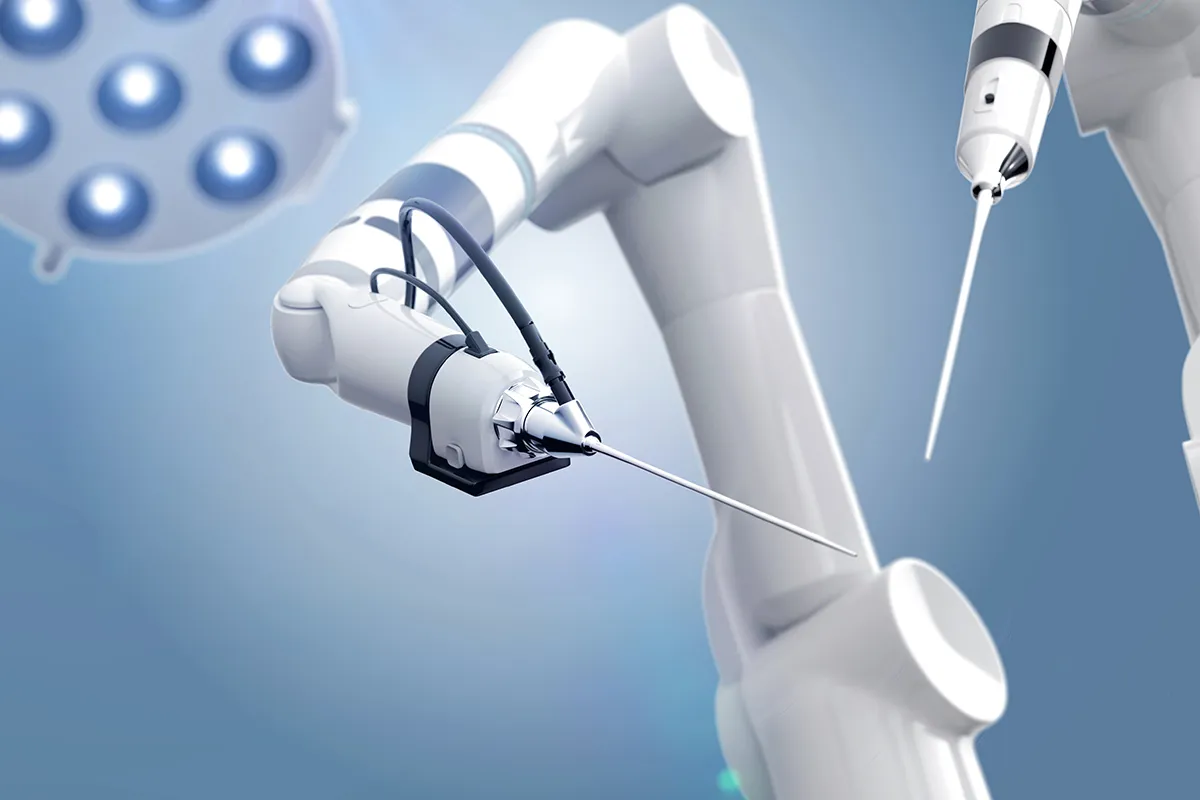
Powerful drive technology for robotics
Robots can help carry out processes in parallel and also offer high precision and reliability for tiring or repetitive tasks: qualities that are particularly valuable in medical technology.
To move something, robots need drives that meet a range of requirements. What almost all applications have in common is limited installation space and the need for drive units that are both compact and lightweight. High torque and precision, high dynamics and maximum power density are also required. Particularly when interacting with human colleagues, drives must operate quietly so as not to distract them. Connectivity must also be possible, so that they can reliably connect to and exchange information with the other components of the robot’s drive system. Some specialist applications require resistance to magnetic fields, vacuum resistance or low power consumption for mobile, battery-powered use. Self-locking drives or drives with extremely low backlash may also be necessary. In some cases, the ability to sterilise the drives is essential. In short, requirements are varied and standards are stringent. FAULHABER’s experts have many years of practical experience and have contributed to a wide range of solutions.
Application area: the operating theatre
Surgical robots have become indispensable. More than 70 companies already offer systems for a range of procedures, including those involving the spine, knee and abdomen, as well as neurosurgery, otorhinolaryngology, biopsies, gynaecology, urology and heart surgery. The advantages of using robots in the operating theatre are clear: a robot does not tire and offers maximum precision and speed, as well as optimum ergonomics. Experts are convinced that robots will revolutionise work in the operating theatre: the surgeon controls the robot arms used in the procedure from an operating theatre console, using joysticks. Precise, highly dynamic drive systems are required for this application.
The range of systems and concepts is considerable. Depending on the intended use and the procedure to be performed, operating theatres feature common robot types such as articulated robots, SCARA robots, hexapod and tripod robots, as well as so-called “snake” robots. With this last type, winches and rollers or toothed belts are often used to transfer motion from the drives. Low backlash and precise control are the top priorities.
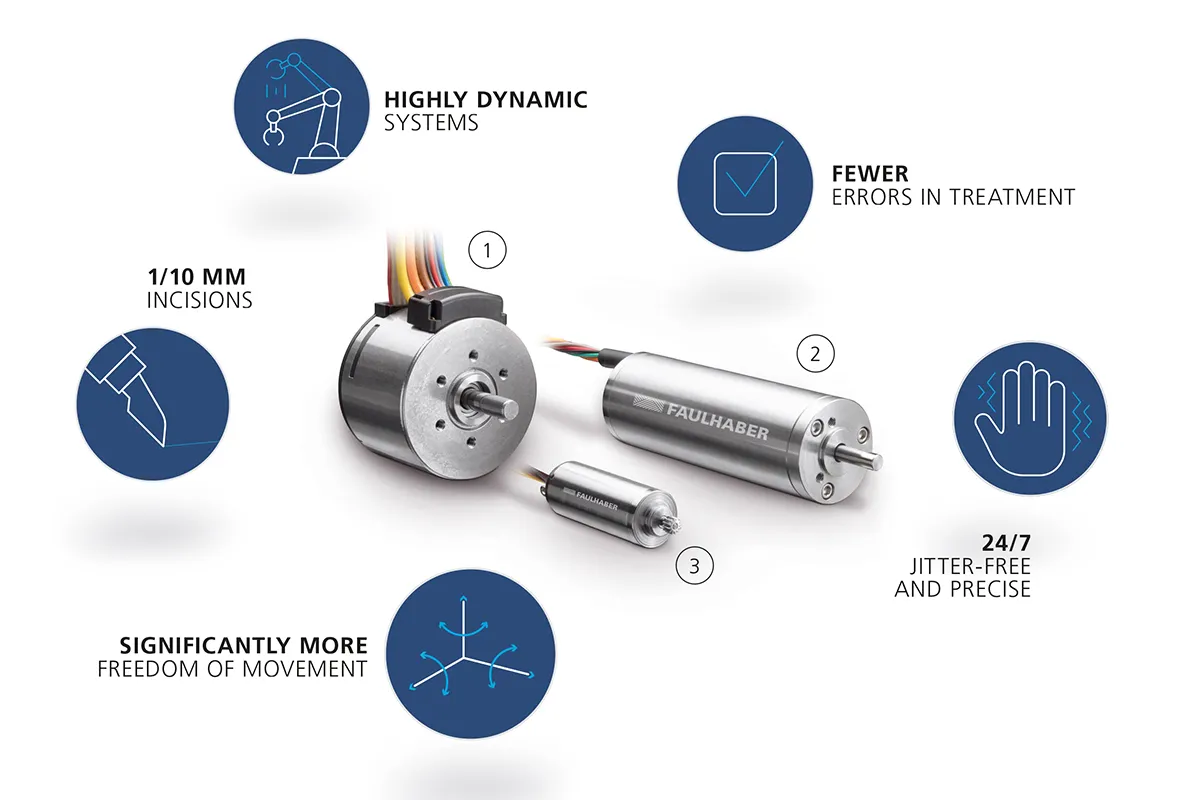
Practical solutions built on years of experience
As the number of robot-assisted procedures performed across different disciplines grows, so does demand for drive systems. With ironless winding technology and a flat speed-torque curve, FAULHABER provides the required characteristics, including precise positioning and speed control. Thanks to its extensive range of innovative miniature drive systems and microsystems, and its modular design approach, customised solutions comprising a drive, a gearhead and a motion controller can be assembled and adapted to meet specific requirements.
High-performance drives are also used in other operating theatre applications: under general anaesthesia, patients are mechanically ventilated. The ventilator’s turbine unit contains a brushless DC motor with a diameter of just 24 millimetres. The drive is not only very fast and quiet across the entire speed range, but also highly dynamic. This enables almost natural ventilation for adults, children and newborns alike.
Medical applications beyond the operating theatre
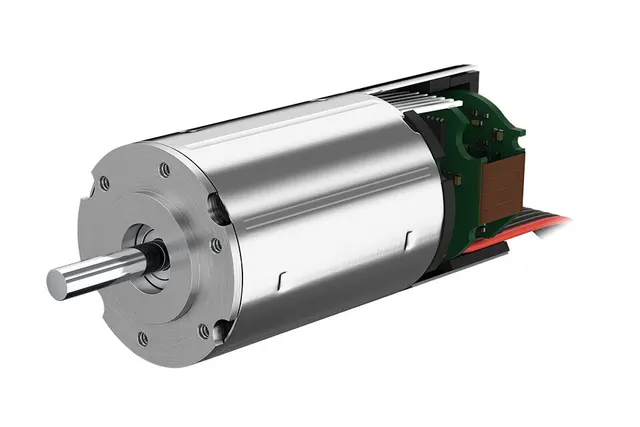
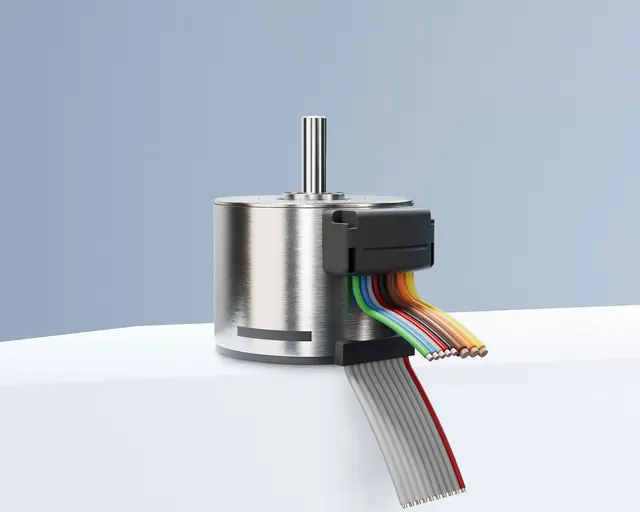
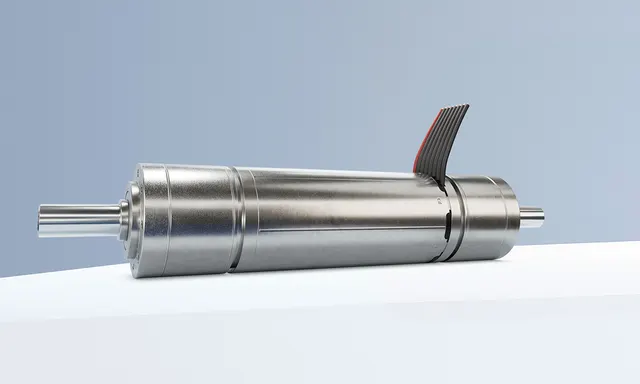
The uses of microdrives in medical technology extend beyond robot-assisted surgery. Drives are also used, for example, in implantable heart pumps, surgical hand tools, cosmetics and medical imaging. Powerful motors, such as those in FAULHABER’s BX4 and BP4 families and the BXT series, can be adapted flexibly for demanding robotics applications using additional components such as a range of gearheads, optical, magnetic or absolute encoders, and speed or motion controllers.
Question about this story? Ask your question
Keep following this
Get an email when a new story is published. No account needed.
- ThemeHigh-performance drives and precise motion
- SubjectMotion & drives