Pneumatics at its most sustainable
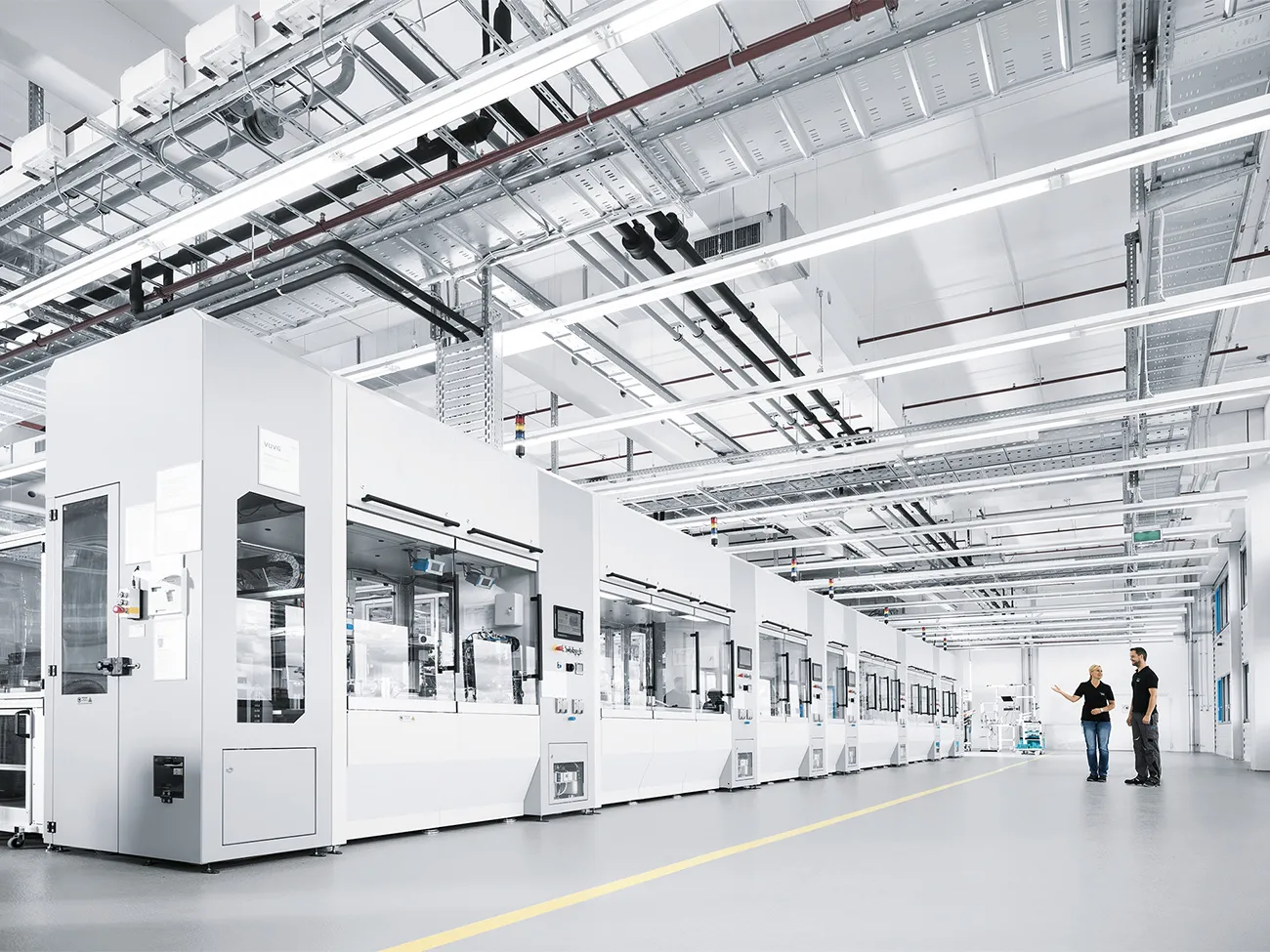
Sustainability must become the foundation of a competitive European industry. If we are to achieve our ambition of carbon neutrality, we will have to step up a gear. Festo therefore put the subject at the top of the agenda at its annual press conference. This includes redesigning its own products to make them more sustainable, offering Festo Economy Saving Services to help companies save energy, and developing a bioreactor that can efficiently produce algae on a large scale through photosynthesis. The company also announced that it will be carbon neutral by early 2023.
Automation will play a key role in industrial transformation towards climate protection, efficient resource use, sustainability and the circular economy. Festo also wants to lead by example, significantly reducing its carbon footprint over the next two years.
“As a result, all our production and logistics sites worldwide, as well as our sales sites in Germany and our headquarters in Esslingen, will be carbon neutral from early 2023,” explains CEO Oliver Jung.
Festo has used the United Nations Sustainable Development Goals as benchmarks for its own sustainability strategy. Its efforts are illustrated by the concept known as “Blue World”. “We want to show how automation technology can balance the growth of the global population with the protection of our natural resources and climate-neutral production,” explains Jung. The aim is to help transform industry towards efficient, climate-friendly production.

A partner to customers
“Our customers see us as a partner in their own transition. Together with us, they can shape the transformation of industry. Innovation will play a key role in this,” adds Jung.
Festo has a strong track record in this field. Digital, intelligent pneumatics, automation platforms and energy-saving concepts for pneumatics… Festo also unveiled the world’s first pneumatic cobot at the last Hannover Messe. It intends to continue playing a pioneering role. In 2021, 7 % of its revenue was reinvested in research and development.
Festo Didactic helps companies tackle the challenges of today and tomorrow as they make this transition. Its training programmes provide the content and learning environments needed to teach new subjects, tailored to requirements in IT, artificial intelligence, data science and sustainability.
Sustainable products
Carbon neutrality starts with sustainable products. Festo’s “Stars in Automation” comprise more than 2,200 pneumatic and electrical components in the German automation specialist’s core range. Machine builders can use them to build around 80 % of all their applications easily, quickly, even in large quantities, and at an attractive price. The defining feature of the latest additions to this range is sustainability. They are designed to save weight, volume, energy, raw materials and space, all of which help make machines more sustainable
A good example is the new DSNU-S round cylinder, which delivers the same performance as the proven DSNU cylinder, but is 35 mm shorter and has a mounting interface that is 40 % narrower. Achieving this calls for close collaboration between developers and production planners to reduce cycle times.
Sustainable engineering
But how can you tell whether you are making the sustainable choice when building your machine? A machine’s design lays the foundations for its carbon footprint. Free engineering tools help customers understand the relationship between products and CO2 emissions. There is also a focus on innovative solutions to reduce these emissions.
Julia Bikidis, project manager for reducing CO2 emissions across Festo’s product portfolio: “The focus is always on how customers use our products. But we also look at how much CO2 is required to produce them. We expect the digital product passport to become standard in the next five to ten years. Through our work on digital twins based on the administration shell, we are trying to anticipate this and achieve a carbon-neutral product portfolio. The key support will come from the technological benefits offered by Controlled Pneumatics,” says Bikidis.
Controlled Pneumatics
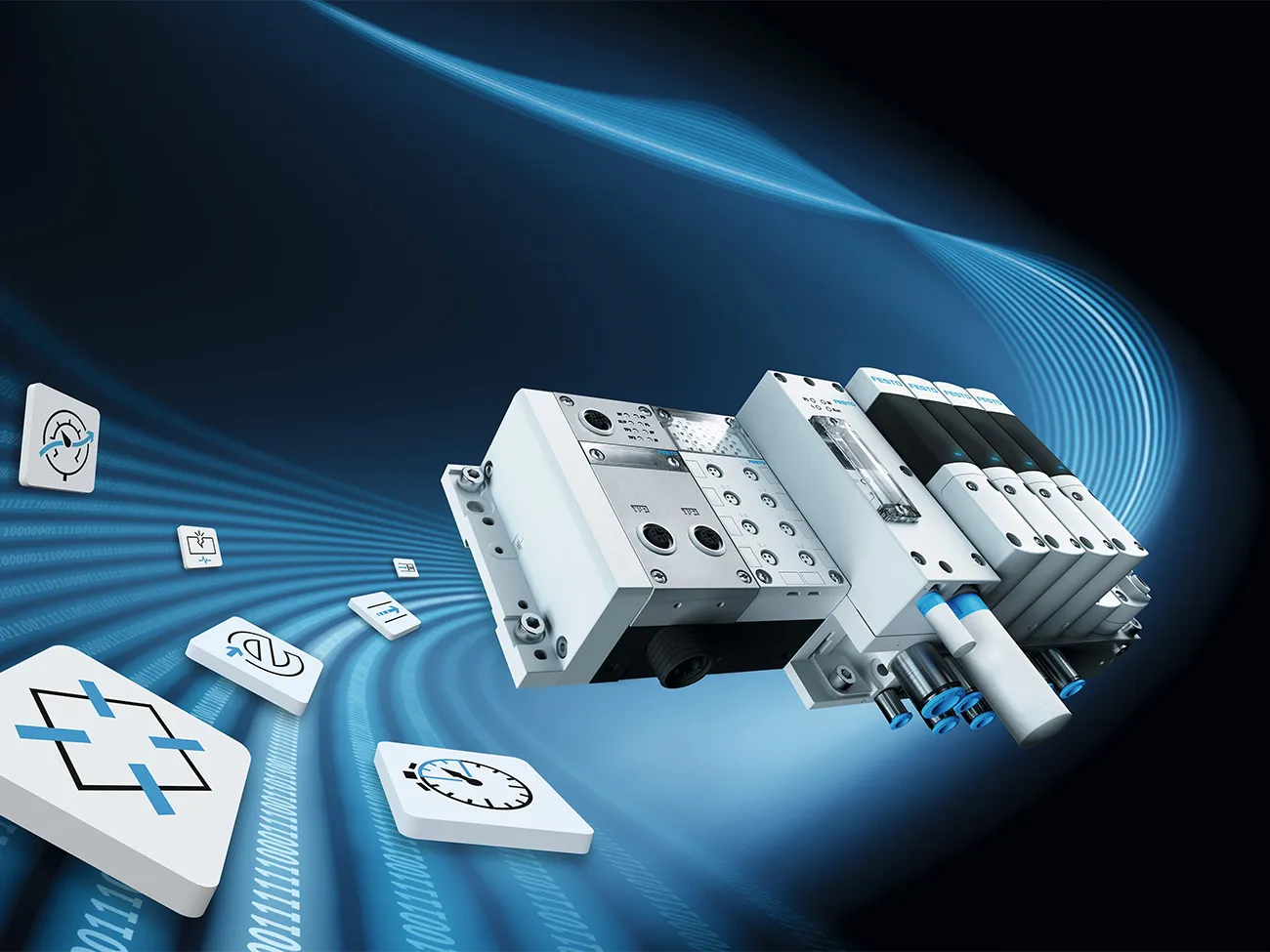
For anyone now raising an eyebrow in Cologne: Festo uses Controlled Pneumatics to describe mechatronic pneumatic systems featuring innovative valve and communications technologies. Digital control can be applied on the basis of the variables collected by sensors. This means users can continue to rely on the simplicity of standard pneumatics to get things moving, while benefiting from greater control for more reliable, precise and efficient solutions.
The flagship example of pneumatic control is the Festo VTEM Motion Terminal, which has brought digitalisation to the world of pneumatics. Festo is taking compressed-air technology to a whole new level, with resource conservation, energy efficiency and sustainability as its watchwords.
Hunting for compressed-air leaks
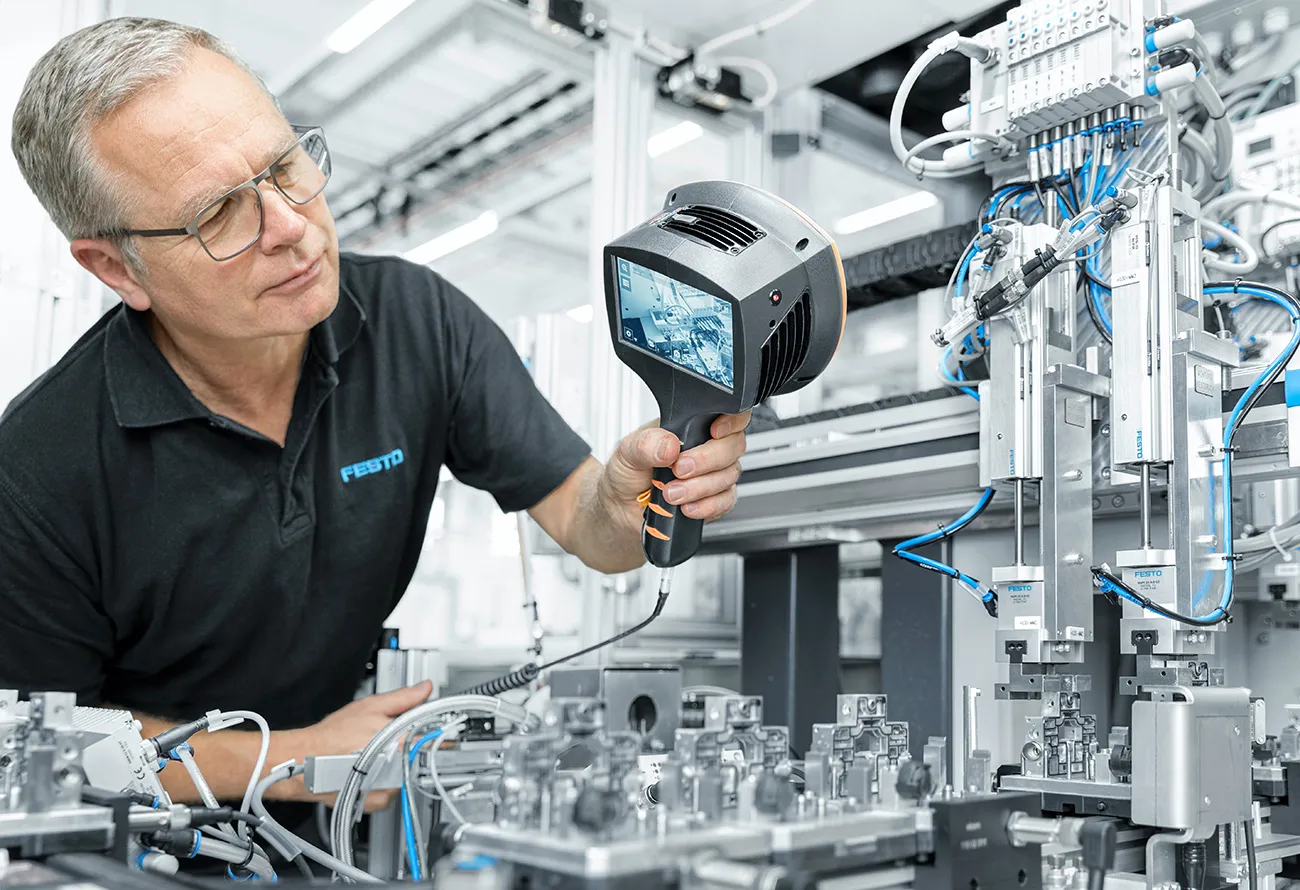
A good idea, particularly given current energy prices. It is therefore no surprise that Festo Energy Saving Services is also in the spotlight. Festo takes an approach aligned with DIN EN ISO 11011, working with customers to identify potential savings in compressed-air use in a standardised way. And did you know that artificial intelligence can also point the way to energy savings?
Experts follow five steps. In the first three, they assess compressed-air generation, treatment and distribution. They then turn to the consumers: pneumatic applications and systems. The final step introduces a monitoring system to continuously track energy performance. Festo AX Predictive Energy, for example, creates a digital fingerprint of your production line and continually compares it with its current state. Machine learning and artificial intelligence can then be used to detect leaks automatically.
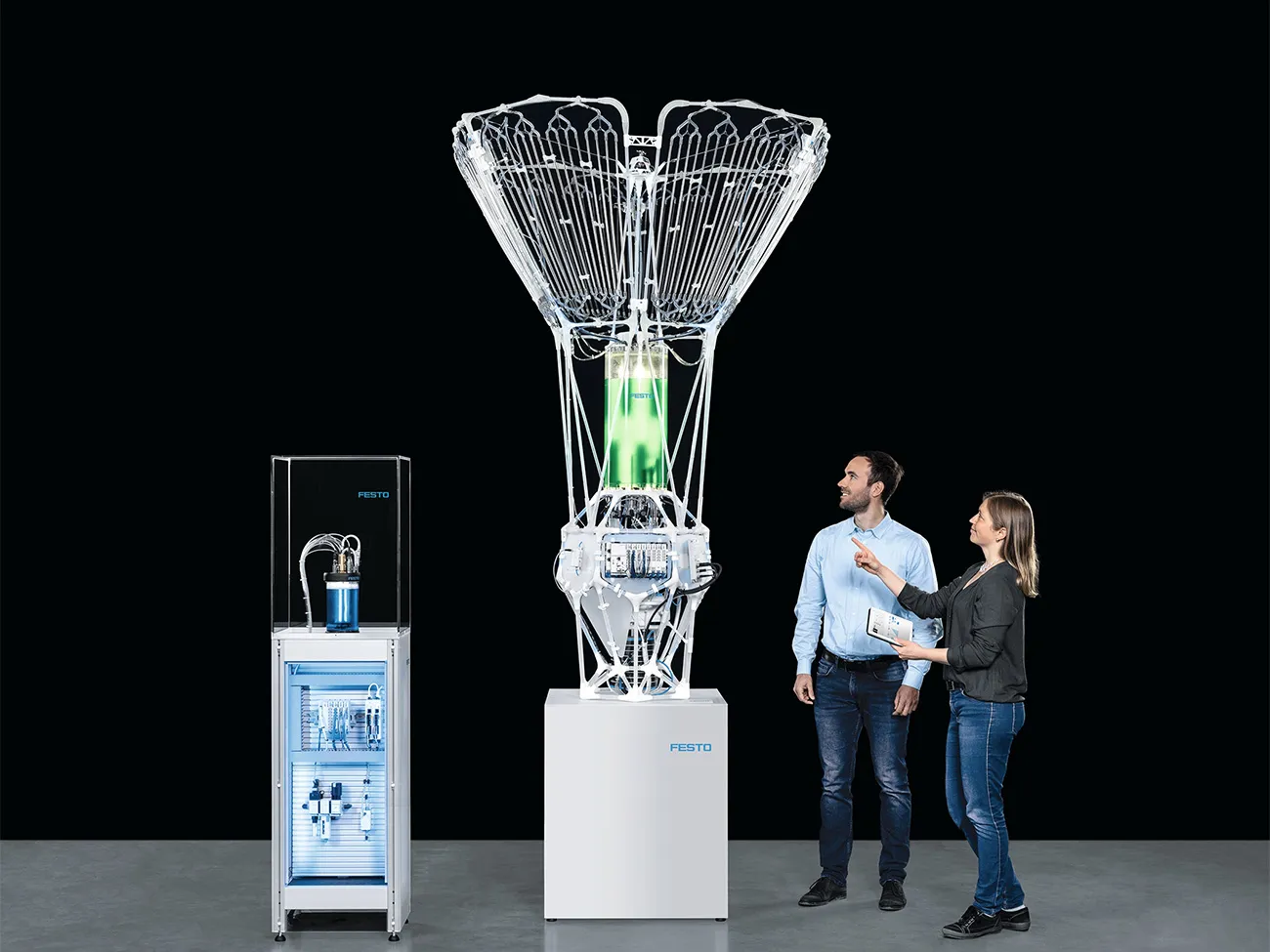
Automated biomass production
Algae are small climate heroes. Even in nature, they perform photosynthesis exceptionally well, absorbing ten times more CO2 than land plants. In bioreactors equipped with the necessary sensors, control technology and automation, algae can be even more efficient, reaching 100 times the level of land plants. This demonstrates their unique potential for achieving a climate-neutral circular economy. Through its PhotoBionicCell research project, Festo is demonstrating one possible approach to industrial biologisation.
Question about this story? Ask your question
Companies in this story


Keep following this
Get an email when a new story is published. No account needed.
- ThemeExtending the life of industrial installations
- SubjectMotion & drives
- CompanyFesto
- CompanyHANNOVER MESSE