Helping customers make the transition to Industry 4.0
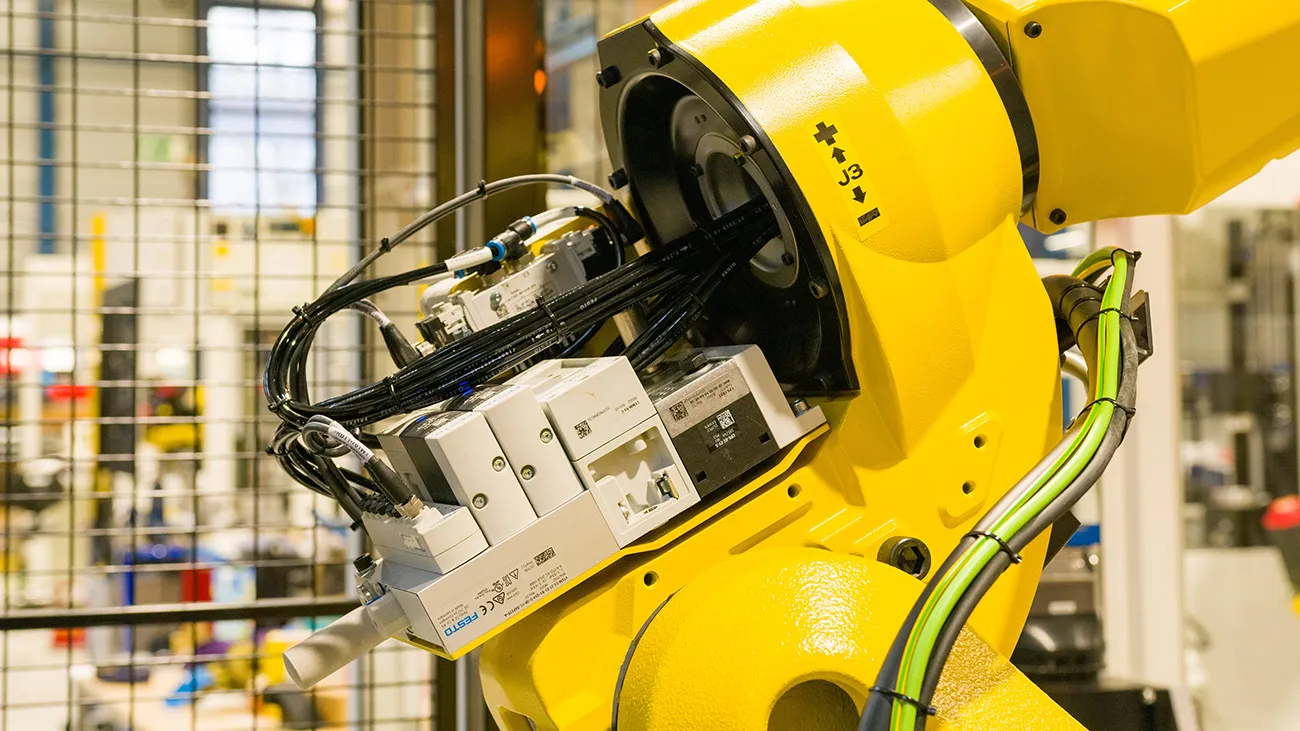
In its ambition to take its automation solutions for CNC machine tools to Industry 4.0 and beyond, Cellro took a close look at the hardware and software used in its systems. This led to a major transition, in which Festo’s Motion Terminal played a key role.
Focusing on automation and digitalisation is not the usual response from machining companies. Cellro director Arnoud de Kuijper is well aware of this: “Adoption of Industry 4.0 is still relatively low in this sector. Our mission is to make this innovation possible for manufacturing companies.” How can you support them effectively? “You need to offer the flexibility customers need, but you also don’t want to reinvent the wheel for every project,” he says, outlining the challenge. “So we need to move towards standards and a configure-to-order model with plenty of variables. This is the basis of our current approach to robotics, grippers and the rest of our technology.”
Long stroke
As the range of products handled by Cellro’s systems continues to grow, changeover times are becoming increasingly important. “When you switch to a different product, you often need a different gripper. If we can optimise and minimise changeovers, our customers will benefit greatly.” A key part of Cellro’s solution is a long-stroke gripper that can automatically select the required gripping width across its full range. “It may not cover a customer’s entire range,” admits Mr De Kuijper, “but it gives you the flexibility, for example, to process a whole series of products with a single gripper.” Controlling the long-stroke gripper was no simple matter. Mounting the valve terminal at the robot’s elbow proved to be the most effective option. In the wrist, close to the gripper, it gets in the way and adds mass where movement is greatest. However, if the terminal is mounted at the base of the robot arm, all the cables and tubing pose a challenge, as they have to run all the way through the moving, rotating arm.
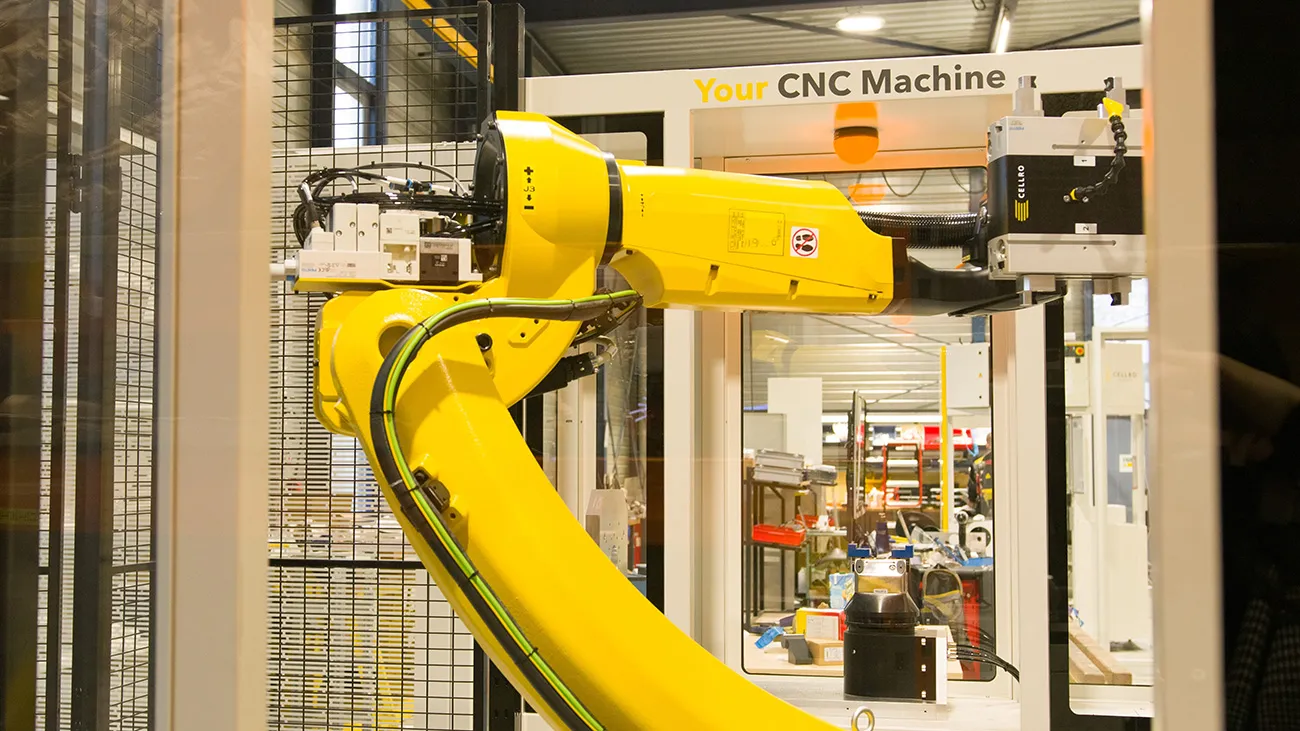
Motion Terminal
The long-stroke gripper envisaged by Cellro offers many more functions. It must be able to open and close, but also position its fingers very precisely, for example. “We want to be able to do this to the nearest millimetre,” says De Koning. Cellro therefore turned to its motion specialist partner, Festo. Festo suggested replacing its standard valve terminal with the Motion Terminal. “The system works with applications, pre-programmed functions that let you define all kinds of movements,” explains De Koning. “Sensors built into the gripper head provide feedback on the position of the gripper fingers, enabling the Motion Terminal to control movement with great precision.” Cellro can now position the gripper fingers to within a millimetre. This allows the head to grip objects that are close together. It may seem like a small detail, but it means customers can place products closer together in storage, increasing production capacity. “We can also set the force and speed very precisely,” continues De Koning. “You only need to define a few parameters and the Motion Terminal takes care of the actual movements. This lets you generate special motion profiles based on the objects you want to grip.”
Adapting to changing conditions
The Motion Terminal can adapt to changing conditions. For example, if a small leak develops between the valve and the gripper, internal pressure sensors can detect it. The Motion Terminal then assesses the leak and can compensate for it. The same applies if friction in the mechanism increases or decreases over time. Closed-loop control allows the Motion Terminal to smooth out these variations. “The Motion Terminal gives us valuable information that we can use for predictive maintenance,” says De Kuijper. “This fits perfectly with our ambition to move towards full digitalisation. That requires a lot of information and intelligence. With the Motion Terminal, we are taking an important step in that direction and can build on it. This makes me confident that we will still be on the right track in a few years’ time,” concludes De Kuijper.
Question about this story? Ask your question
Companies in this story

Keep following this
Get an email when a new story is published. No account needed.
- ThemeData-driven design and operations
- SubjectMotion & drives
- CompanyFesto