A dual strategy for Industry 4.0
~ WEG rolls out bespoke digital tools at its winding plant ~
Industrial digital solutions are revolutionising the management of equipment and assets. However, for WEG, the global industrial equipment manufacturer, Industry 4.0 is not just a strategy for product development, but also for internal processes. Mateus Nicoladelli de Oliveira, a member of WEG’s digital solutions team, and Jesus Angel Rivas Moro of WEG Iberia discuss the approach taken to rolling out Industry 4.0 at the plant in Jaraguá do Sul, Santa Catarina, Brazil.
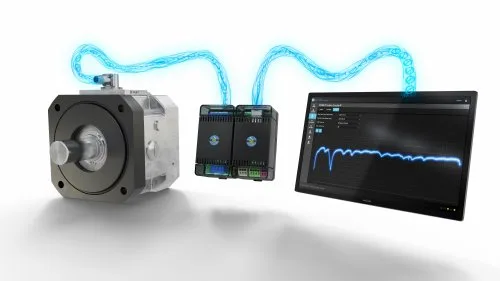
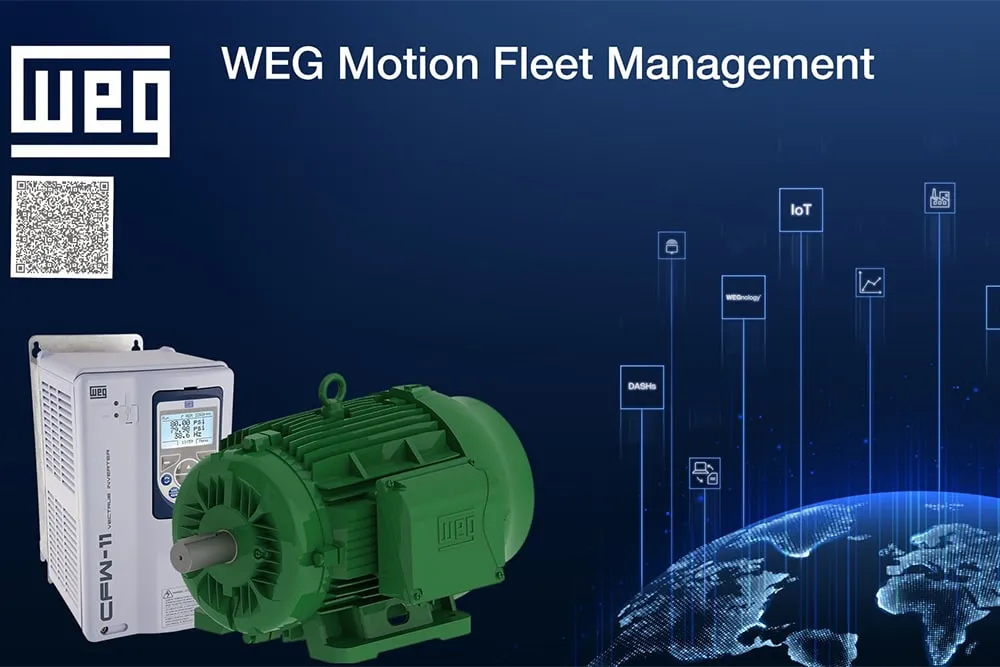
For around the past ten years, WEG has been developing solutions for Industry 4.0, including WEG Motion Fleet Management (MFM), an online equipment monitoring and management tool, and WEG Motor Scan, a sensor installed on the equipment. In addition to these products, WEG has also developed and implemented Industry 4.0 tools for internal applications on its production lines.
The solutions include the installation of WEG Shop Floor Management (WSFM), a digital technology used internally at WEG production centres, and WEG Manufacturing System (WMS), a customised tool used by WEG to improve manufacturing methodologies and reduce losses. Both technologies work alongside MFM and WEG Motor Scan at WEG’s own production facilities, not just at its customers’ sites.
The pilot plant for Industry 4.0 is the winding plant at WEG’s headquarters in Jaraguá do Sul, Santa Catarina, Brazil. Here, we explore the benefits of this approach.
Industry 4.0 in action
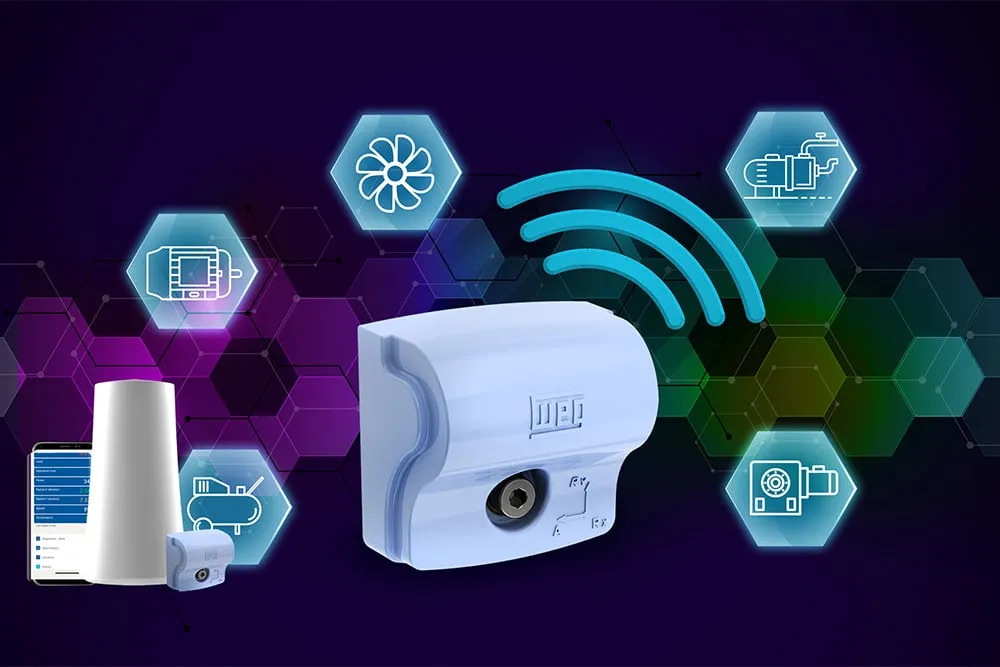
The MFM solution currently used at the winding plant monitors 348 items of equipment, providing accurate information for maintenance based on their operating condition (condition-based maintenance), which is essential for predictive maintenance. Key equipment monitored by MFM includes motors, variable speed drives, soft starters, gearboxes, compressors, pumps and fans.
MFM is cloud-based and runs on the WEGnology platform, meaning it can be used anywhere in the world from any WEG site. MFM enables engineers to monitor the operating condition of low- and medium-voltage generators and motors, low- and medium-voltage variable speed drives and soft starters, smart relay starting systems, gearboxes, geared motors, compressors and other equipment installed in a wide range of industries and facilities.
Regular data collection and advanced processing, at the edge and in the cloud, provide valuable insights. This makes it possible to develop predictive maintenance programmes that take the operating condition of the asset base into account.
Working in layers
MFM is based on the concept of layers. The first layer comprises industrial equipment that can be monitored by MFM. The second layer provides for its digitalisation and cloud connectivity through WEG Scan and Gateway tools.
The third is a software layer that acts as a management layer. In this space, data is presented in the form of dashboards, reports, notifications and other formats. This is what makes MFM useful to manufacturers.
Some of these features include a dashboard for vibration analysis, a maintenance management module with computerised maintenance management system (CMMS) functions, backup of control parameters, a notification and management application (WEG Digital Notify APP), optimised data processing at the edge, and much more.
The fourth and final layer comprises what are known as the specialist and exchange modules. The specialist module provides advanced features for each item of equipment monitored by MFM, enabling autonomous fault diagnosis and energy consumption analysis through advanced data analytics using artificial intelligence algorithms based on WEG’s expertise. The exchange module is used to integrate with third-party systems.
Ensuring security
As an Industry 4.0 tool, security is paramount in this application. MFM complies with stringent cybersecurity standards to ensure information is secure, implementing state-of-the-art security standards, mechanisms and tools. These measures include encryption of data in transit and at rest, authentication tokens for each device, and controlled and segmented access, as well as load balancing and redundancy features. This enables the application to ensure operational availability and meet its information, operational and security availability objectives.
Authentication using access tokens generated by the application is used to connect gateways, devices or mobile applications to MFM. This ensures that equipment with such tokens can consume and publish data in the MFM solution. This strategy is deployed at the Jaraguá do Sul plant to keep its connected facilities secure.

Industry 4.0 results
Beyond the immediate, direct results of implementing a digital equipment monitoring system, other changes to maintenance programmes and procedures have helped reduce overall maintenance costs and production downtime, while increasing machine availability.
In one particular case at the winding plant, an annual preventive maintenance activity was scheduled. Removing 10 motors from the structure, carrying out maintenance and reinstalling the motors took up a week in the maintenance schedule. Thanks to the greater confidence provided by the MFM solution, which enables faults to be detected early, the annual preventive maintenance schedule was changed. Machines and motors now run continuously, and maintenance on a particular motor is only scheduled when the MFM system identifies a trend or an upcoming problem.
Overall equipment effectiveness (OEE) is a useful measure for assessing the production of a facility, breaking it down into three factors: availability, performance and quality. While an online equipment monitoring system does not affect quality losses, which are more closely linked to proper process control, it directly affects performance losses and even availability losses.
In 2018, the performance and quality rate stood at 98%, a world-class result. Implementing the equipment management and health monitoring system also improved availability by around 10% over three years.
In 2020, the 4.0 approach to maintenance and online monitoring helped prevent 49 cases of unplanned downtime, resulting in cost savings of 6%. The number of person-hours spent on requests for electrical and mechanical corrective actions, as well as preventive and predictive actions, also fell by around 10%.
In addition, maintenance expenditure per scheduled machine hour on the company’s enterprise resource planning (ERP) platform fell by 23%. The Industry 4.0 initiatives adopted by the winding plant contributed to a 5% increase in total OEE.
According to WEG, this dual strategy has delivered significant operational efficiency gains at the Jaraguá do Sul plant and many others around the world. Using this technology internally also enables WEG to improve the capabilities of its own digital tools, so that its customers can benefit from them in turn.
For more information about WEG, please visit www.weg.net.
Een zakelijke vraag aan WEG Benelux S.A.? Get in touch
Companies in this story
Keep following this
Get an email when a new story is published. No account needed.
- ThemeData-driven design and operations
- SubjectMotion & drives
- CompanyWEG Benelux S.A.